Videos
YouTube coverage and analysis of the Terafab project — organized by topic with timestamped clips
Click any topic to see timestamped clips from across all videos. Each clip links directly to the exact moment in the video.
1 Terawatt Compute Output Target
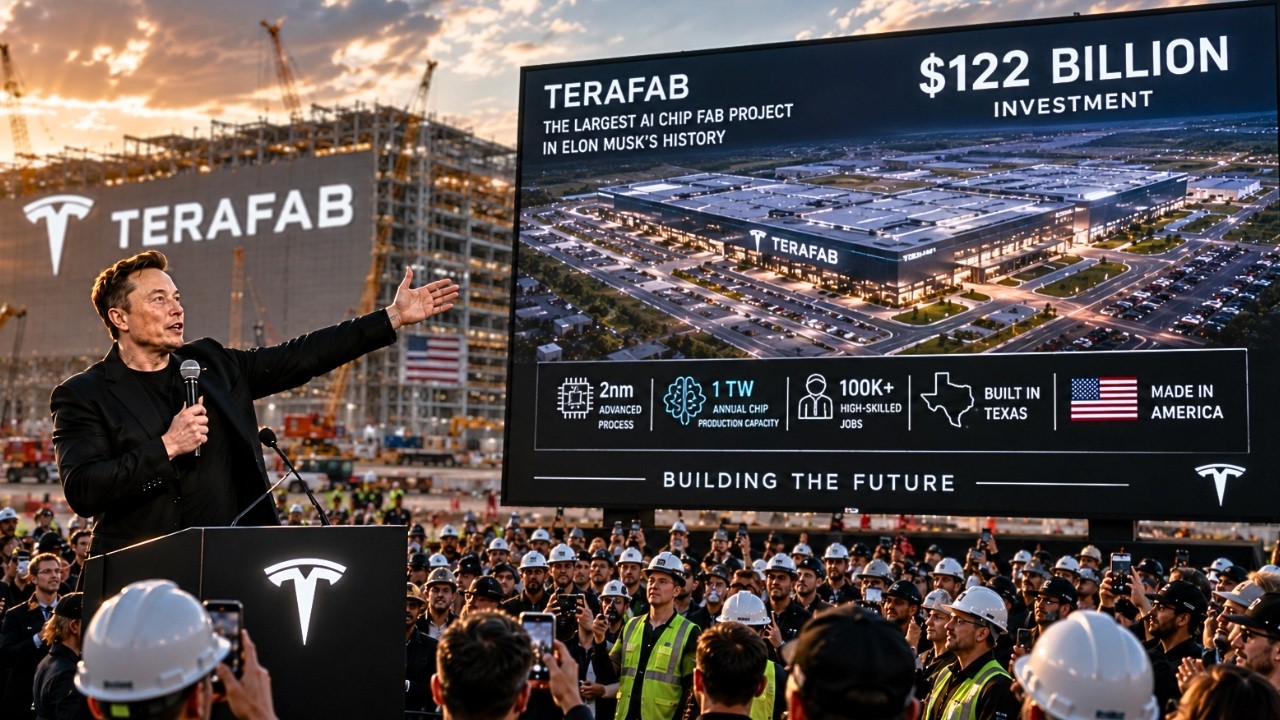
2 clipsThe facility targets 1 terawatt of annual AI compute capacity—50 times current global output of 20 gigawatts. Initial production of 100,000 wafer starts per month scaling to 1 million, representing 70% of TSMC's total global capacity from a single site.
1 Terawatt Compute Target
2 clipsThe facility targets 1 terawatt of AI compute annually—roughly double the entire US electrical grid output—requiring 100,000 to 1 million wafer starts per month, producing 100-200 billion chips yearly.


1 Terawatt Compute Target
2 clipsTerafab aims for 1 TW of annual AI compute—50x current global output—via 1 million wafer starts/month, dwarfing TSMC's entire capacity.

2% Supply Crisis
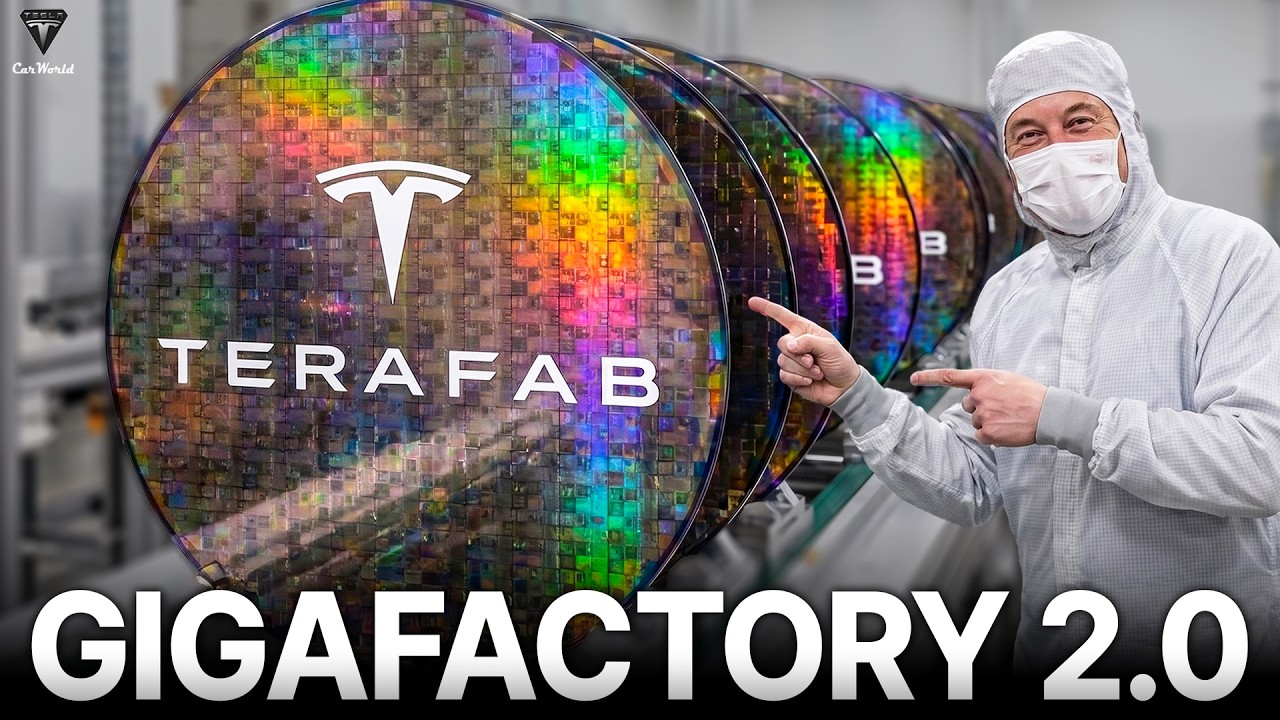
3 clipsGlobal fabs produce only 2% of Musk's companies' future chip needs for Tesla FSD, Optimus, xAI, SpaceX. Suppliers like TSMC/Samsung expand too slowly. Terafab ensures independence amid geopolitical risks.


80% Space-Based AI Deployment
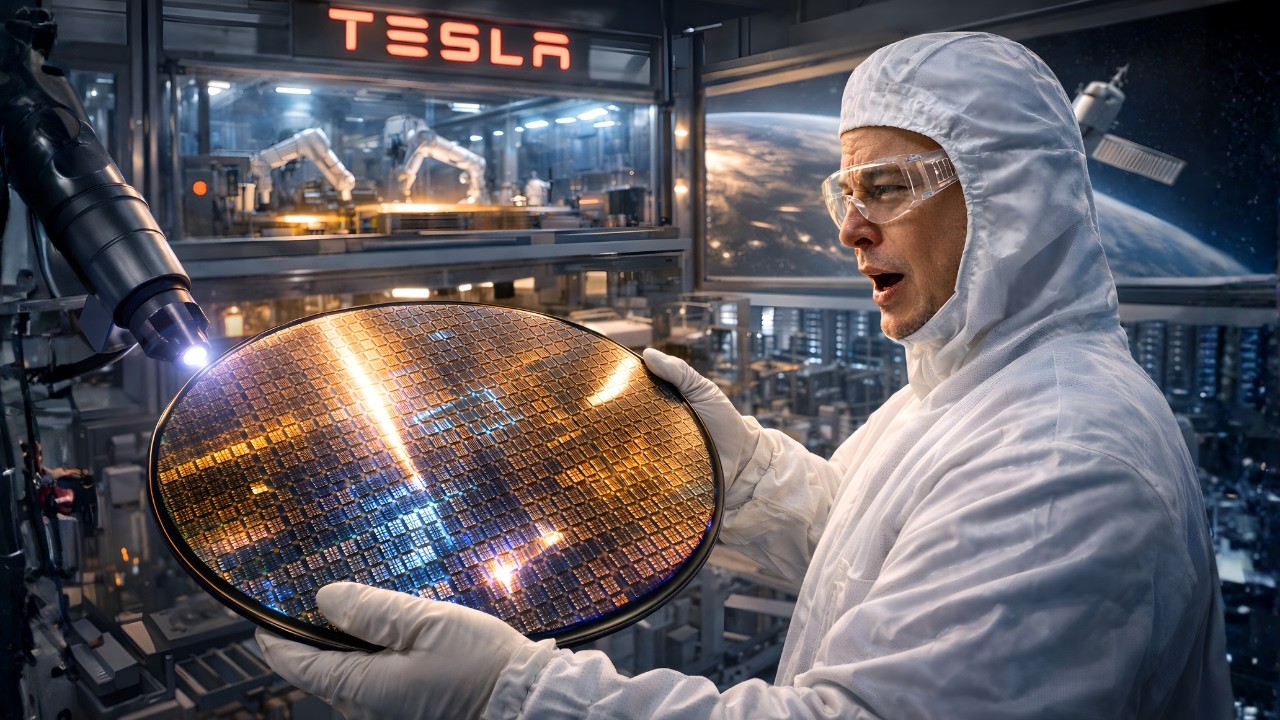
2 clips80% of Terafab output targets orbital AI satellites in sun-synchronous orbit, leveraging 5x solar irradiance and vacuum cooling, while only 20% stays terrestrial for vehicles and robots.

Abundance: Universal High Income Future
2 clipsTerafab/Optimus enable post-scarcity: 10-100x economy growth. Robots replace labor; AI designs abundance for all.

Age of Abundance
3 clipsMusk envisions a future where AI and robotics create such abundance that goods and services become essentially free - referencing Ian Banks' Culture novels where money doesn't exist.


AI5/AI6 Chip Performance Specifications
2 clipsAI5 delivers 40-50x performance over AI4, 10x raw compute, 9x memory capacity, 5x bandwidth at 150-250W vs Nvidia H100's 700W. AI6 targets 2028 with Samsung 2nm process for multi-domain applications.


AI5/AI6 Chip Roadmap
3 clipsAI5 targets edge inference for vehicles/robots with 40-50x AI4 performance at 250W. AI6 extends to data centers via Samsung 2nm in 2027. 9-month development cycle accelerates beyond industry standards.


AI5/AI6 Chip Roadmap
2 clipsAI5 targets edge inference for vehicles and Optimus with 40-50x performance over AI4. AI6 extends to data center training. Both leverage 2nm process with 9-month development cycles.

AI5/AI6 Chips for Vehicles & Robots
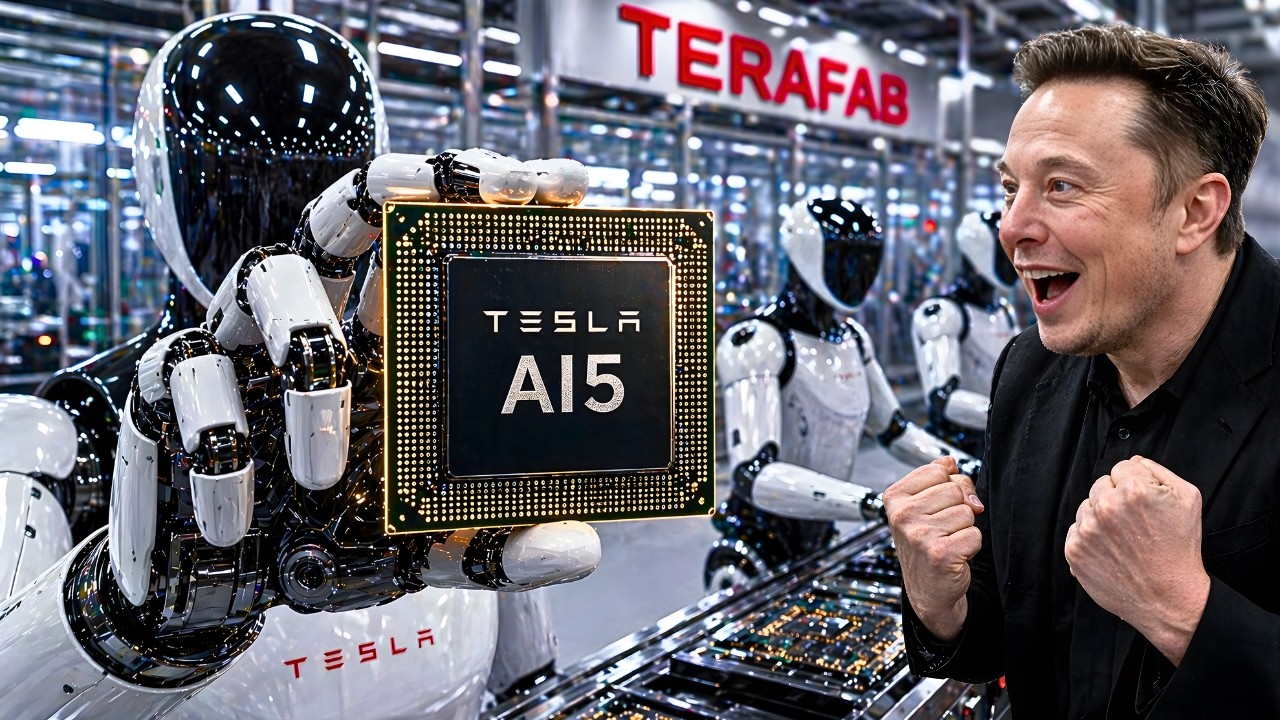
3 clipsTerafab's first products are AI5/AI6 inference chips for FSD, Cybercab, Optimus (20% output). AI5: 40-50x AI4 performance, 9-10x memory at 250W. Optimus demand: 10-100x cars, billions/year.

AI5/AI6 Chip Specifications
1 clipsAI5 delivers 40-50x compute and 9x memory of AI4 at 150-250W; AI6 targets 2nm GAA process with Samsung; 9-month development cycle vs industry standard 12-18 months.
AI5, AI6 & D3 Chip Generations
2 clipsAI5 (terrestrial inference) targets 2026-27 production; AI6 follows 2028; D3 space-grade chips run hotter and radiation-hardened for orbital deployment.

AI5, AI6, D3 Chip Generations
2 clipsAI5 delivers 40-50x performance for terrestrial robots and vehicles; D3 chips are radiation-hardened for orbital deployment with higher thermal tolerance.

AI5 & AI6 Terrestrial Chips
2 clipsAI5 delivers ~50× the performance of AI4 at ~150–250 W for FSD, Cybercab, and Optimus; AI6 extends the architecture to data-center training workloads.

AI5 and D3 Chip Families
2 clipsTwo specialized chip lines are planned: AI5/AI6 for terrestrial edge inference in vehicles and Optimus robots, and D3 radiation-hardened chips for space-based AI satellites.

AI5 Chip: 40x Performance of AI4
3 clipsAI5: 40-50x compute vs AI4, 9x memory bandwidth, 250W power. For FSD/Cybercab/Optimus. Small batch late 2026, volume 2027. Samsung/TSMC bridge to Terafab.

AI5 Chip for Earth (Cars & Optimus)
3 clipsAI5: 40-50x AI4 performance, 9x memory, edge inference for FSD/Cybercab/Optimus. Small batch 2026, volume 2027. 20% Terafab output.
AI5 Chips for Earth Applications
3 clipsAI5/AI6 for FSD, Cybercab, Optimus robots. 40-50x AI4 performance, 9x memory, Hopper/Blackwell class. Edge inference optimized, small-batch 2026, volume 2027.
AI5 Chip Specifications
4 clipsAI5 delivers 40-50x AI4 performance, 9-10x memory/bandwidth, 250W vs H100's 700W, Hopper/Blackwell class. Targets edge inference for vehicles/robots. Videos detail roadmap to AI6/AI7 for training/space.


AI5 Edge Chips & D3 Space Chips
4 clipsAI5/AI6 for Tesla vehicles/Optimus (40-50x AI4 performance); D3 radiation-hardened for orbital satellites (80% output). 2nm process; small-batch 2026, volume 2027. Videos detail specs, space optimization.
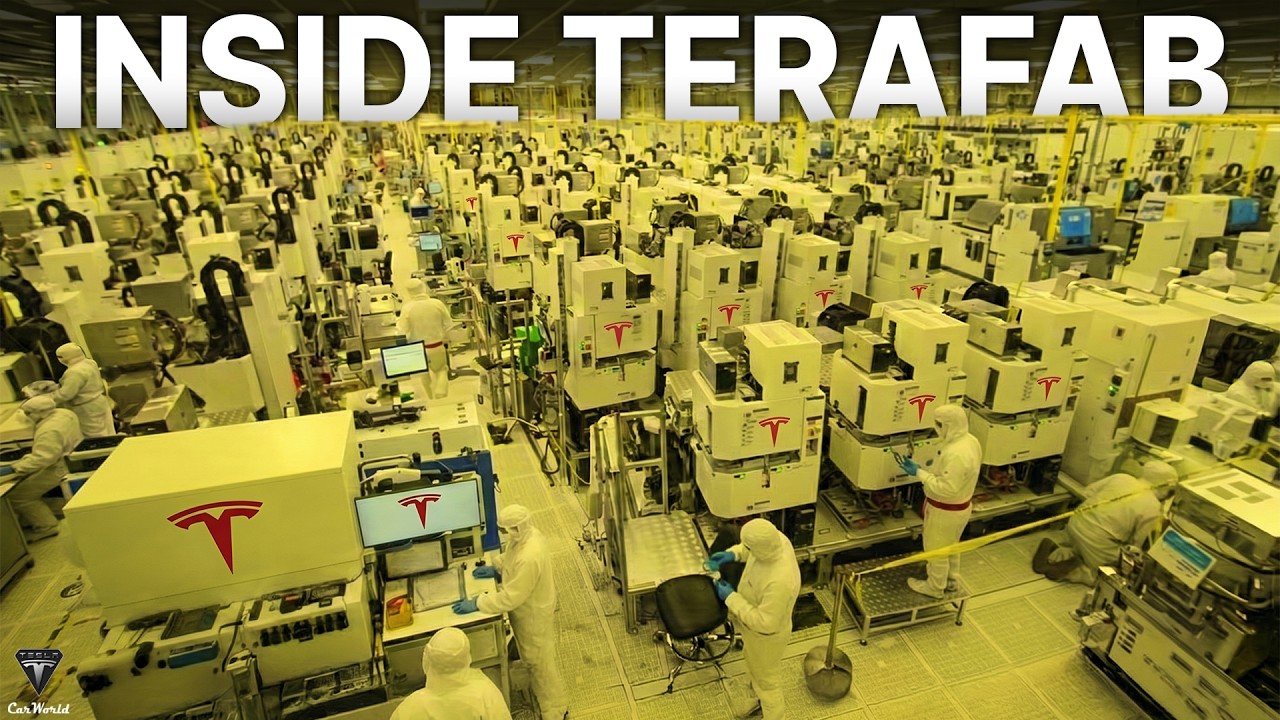
AI5 Edge Inference Chips
3 clipsAI5 chip for Tesla vehicles, Cybercab, Optimus: 40-50x AI4 performance, 9x memory, 250W power. Small batch 2026, volume 2027. Optimized for real-time processing in cars/robots.
AI Chip Generations (AI5, D3)
3 clipsAI5 (40-50x AI4 perf, edge inference for FSD/Optimus); D3 radiation-hardened for space. Tape-out complete, Samsung/TSMC bridge to Terafab. Videos detail specs, timelines.

AI Chip Roadmap (AI5, AI6, D3)
4 clipsAI5: 40-50x AI4 perf, Hopper-class; AI6: training/data centers; D3/Dojo3: space compute. Videos detail 9-month cycles, Samsung 2nm, radiation-hardened D3.
AI Chip Roadmap (AI5, D3, Dojo3)
3 clipsTerafab produces AI5/AI6 for edge inference in vehicles/Optimus (40-50x AI4 performance), D3 radiation-hardened for space, Dojo3 for orbital compute. 9-month cycles vs industry 12-18 months enable rapid advancement.
AI Chip Specs (AI5, D3)
3 clipsAI5: 40-50x AI4 perf, 250W; D3 space-hardened. 2nm GAA process.
AI Compute Demand Crisis
1 clipsCurrent global chip production can only meet approximately 2% of the combined Tesla, SpaceX, and XAI ecosystem's projected AI chip requirements, creating an existential supply constraint.
ASML Equipment & Manufacturing Challenges
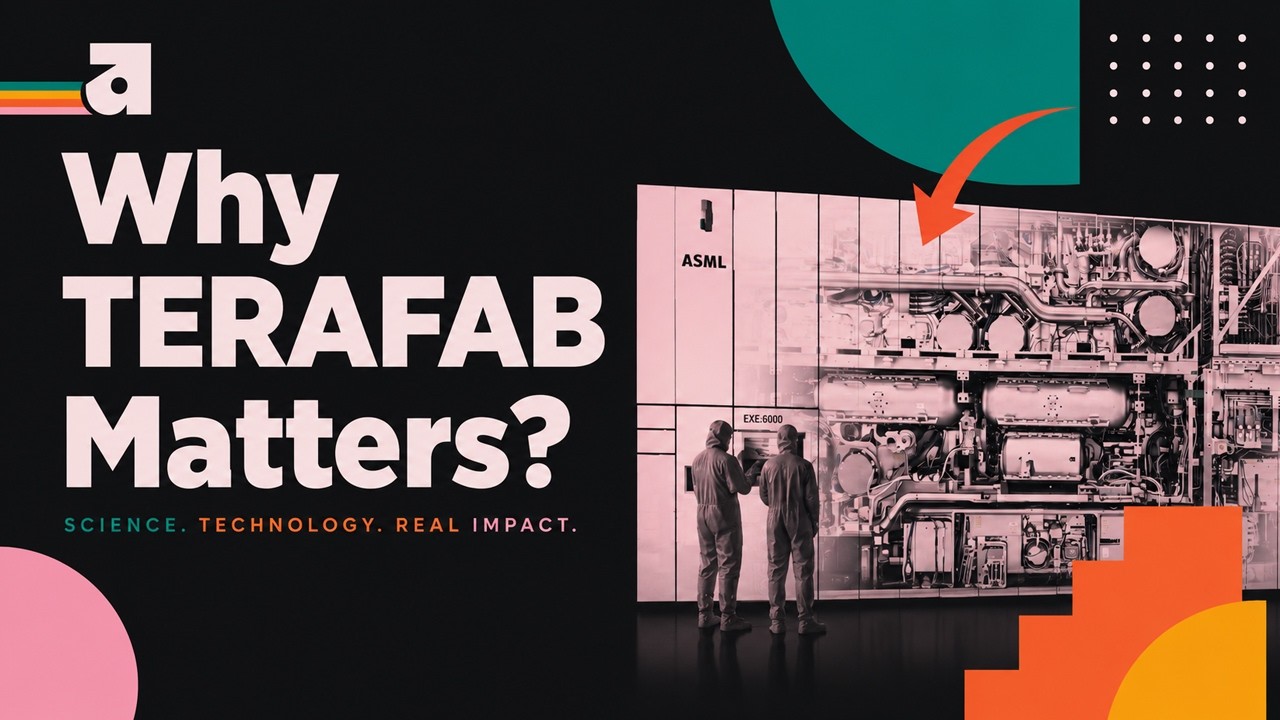
2 clipsASML produces only 50-60 EUV machines per year, all already allocated. A single 2nm fab requires 20+ EUV scanners. Tesla has zero semiconductor manufacturing experience and faces a 5-10 year learning curve.

ASML EUV Machine Bottleneck
2 clipsEach 2nm fab needs 20+ EUV scanners at $380M each; ASML produces only ~50/year globally; Terafab would require years of entire world supply.

ASML EUV Machine Dependency
2 clipsTerafab requires hundreds of $400 million EUV lithography machines from the single Dutch supplier ASML, whose annual output is only 50-70 units, creating a critical equipment bottleneck.

Austin Advanced Technology Fab
4 clipsThe initial 2 million sq ft facility in Austin will be a demonstration fab with all capabilities under one roof - logic, memory, packaging, and lithography mask making for rapid iteration.


Austin Facility and Construction Progress
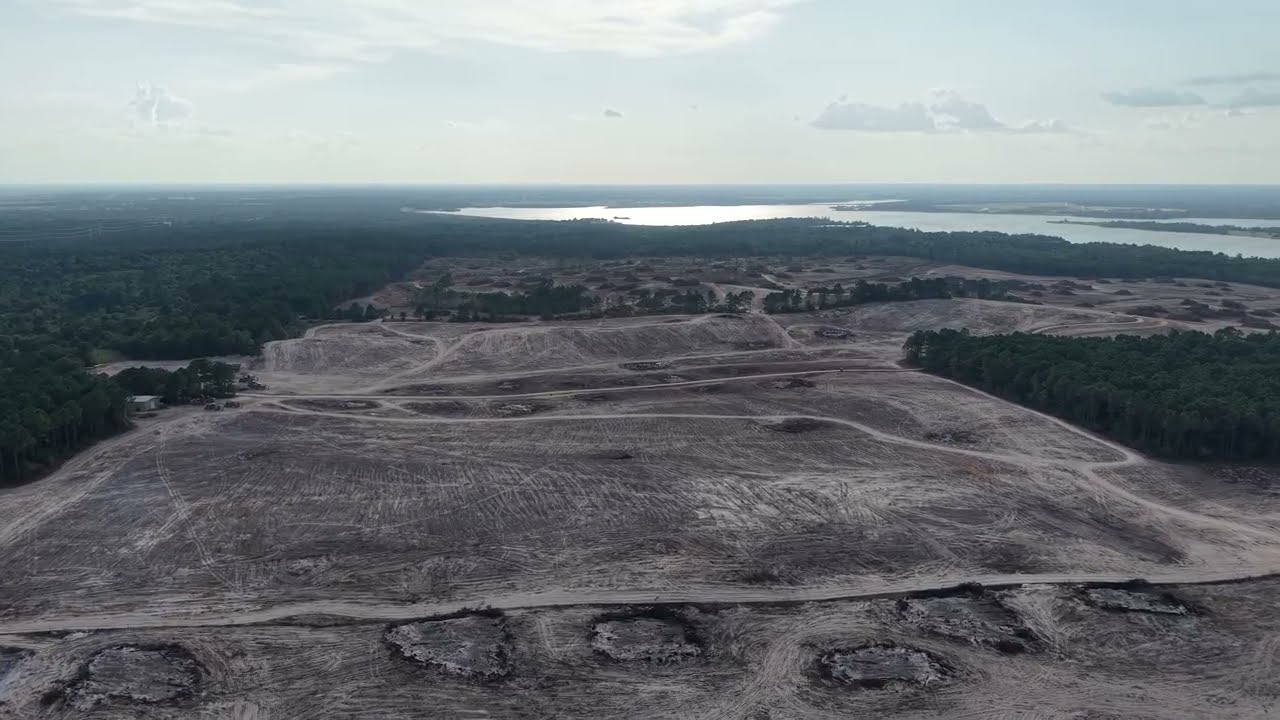
2 clipsPilot R&D fab at Giga Texas North Campus covers 5.2 million square feet. Full Terafab requires thousands of acres and 10+ GW power. Drone footage shows active land clearing and foundation work underway.

Austin Facility & Construction
1 clipsPilot facility on Giga Texas North Campus with 5.2 million square feet; full-scale Terafab requires thousands of acres and 10+ GW power, with construction already visible in drone footage.

Austin Facility & Construction
2 clipsPilot R&D fab at Giga Texas North Campus; full-scale Terafab requires thousands of acres elsewhere. Drone footage shows active grading and foundation work already underway.
Austin Facility Construction and Site Details
3 clipsDrone footage shows land clearing and foundation work at Giga Texas North Campus for the advanced technology fab. The full-scale Terafab requires thousands of acres near Gibbons Creek Reservoir with 10+ gigawatts power capacity.

Austin Facility & Construction Progress
2 clipsPilot 'Advanced Technology Fab' (~2 million sq ft) is already under construction at Giga Texas North Campus. Full-scale Terafab will be ~100 million sq ft elsewhere in Texas.
Austin Facility & Giga Texas Integration
2 clipsPilot facility at Giga Texas North Campus with 2 million square feet for rapid prototyping. Full-scale Terafab requires thousands of acres and 10+ GW power—too large to fit on existing campus, requiring separate locations.
Austin Facility Scale & Location
2 clips100 million square feet facility (10x Giga Texas) requiring thousands of acres and 10+ GW power; initial 2M sq ft advanced tech fab on Giga Texas north campus for rapid prototyping.

Austin Giga Texas Construction Progress
3 clipsDrone footage shows land clearing and grading at Giga Texas north campus for Advanced Technology Fab; full Terafab requires thousands of acres and >10 GW power outside current campus.


Austin Giga Texas Facility
3 clipsAdvanced tech fab at Giga Texas north campus (2M sq ft prototype); full Terafab 100M sq ft elsewhere. Construction visible; drone footage shows site prep. Videos confirm location near existing ops.


Austin/Giga Texas Facility Details
2 clipsPilot Advanced Technology Fab at Giga Texas North Campus spans 5.2 million square feet for rapid prototyping, while full-scale Terafab requires thousands of acres and 10+ GW power.

Austin/Giga Texas Location
3 clipsAdvanced tech fab at Giga Texas north campus. Construction visible, 2M sq ft prototype. Full Terafab elsewhere (100M sq ft, thousands acres).

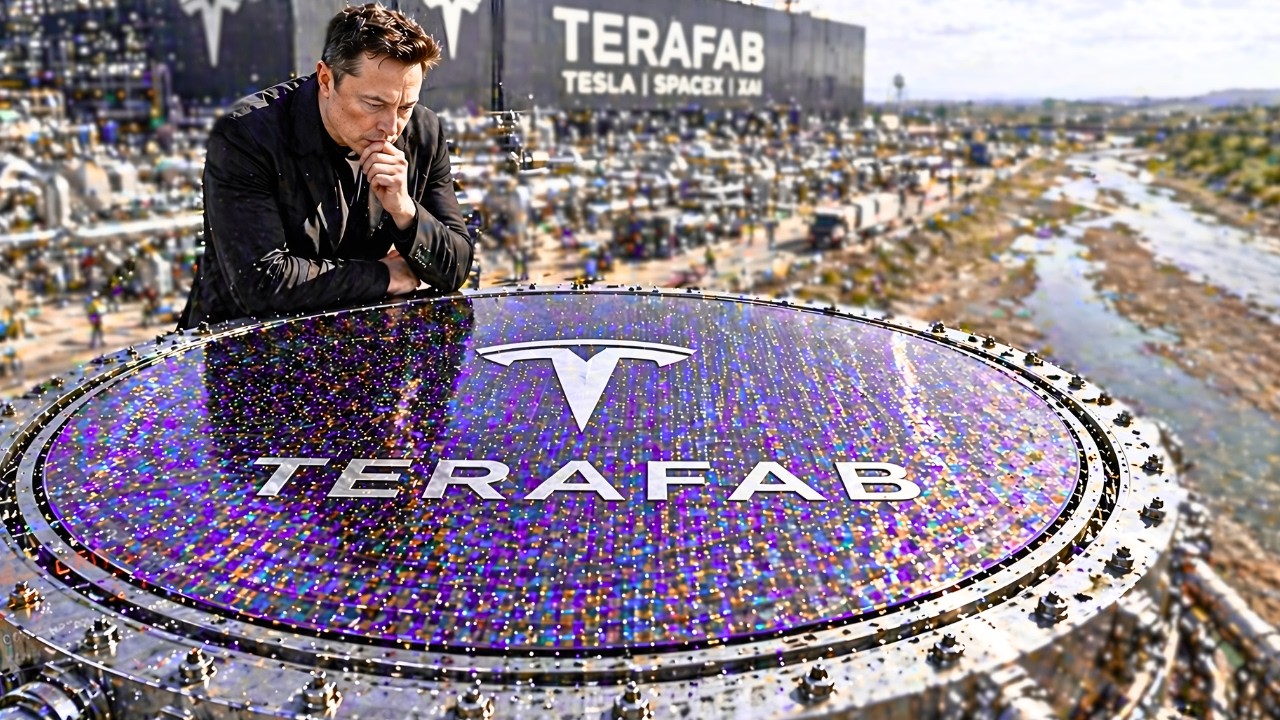
Austin/Giga Texas Location & Construction
3 clipsAdvanced tech fab at Giga Texas north campus; 2M sq ft prototype. Full Terafab 100M sq ft elsewhere. Drone footage shows site prep.


Austin/Giga Texas Site & Construction
3 clipsAdvanced tech fab at Giga Texas north campus (2M sq ft). Full Terafab elsewhere (100M sq ft). Drone footage shows grading underway.

Austin Site Construction and Drone Footage
2 clipsDrone footage shows land clearing, tree mulching, and foundation work already underway at the Giga Texas north campus for the advanced technology fab.
Austin Site Preparation & Construction
2 clipsDrone footage shows land clearing and foundation work at Giga Texas North Campus. The advanced technology fab (R&D lab) is under active construction with visible earthwork and structural preparation.
Austin Texas Facility
2 clipsThe prototype fab runs in Austin next to Tesla's Gigafactory. The full-scale plant will span 22,000+ acres near Gibbons Creek Reservoir, requiring 10 gigawatts of power at full scale.

Broader AI Compute Race / Nvidia
3 clipsMusk praises Nvidia Colossus speed; Terafab complements. Jensen Huang doubts fab feasibility. AI race: power/chips bottlenecks.

Challenges: Cost, Timeline, Expertise Gap
3 clipsNo fab experience; $5T full vision vs $25B initial. TSMC/Intel decades to master; yields/physics brutal. Skeptics cite 4680 delays.


Challenges, Skepticism & Costs
3 clipsSkeptics cite $5-13T total cost, yields, timelines (2-5yrs/fab), no experience vs TSMC's decades. Seismic/vibration issues near Giga Texas presses; ASML EUV scarcity; parallels to 4680 delays.
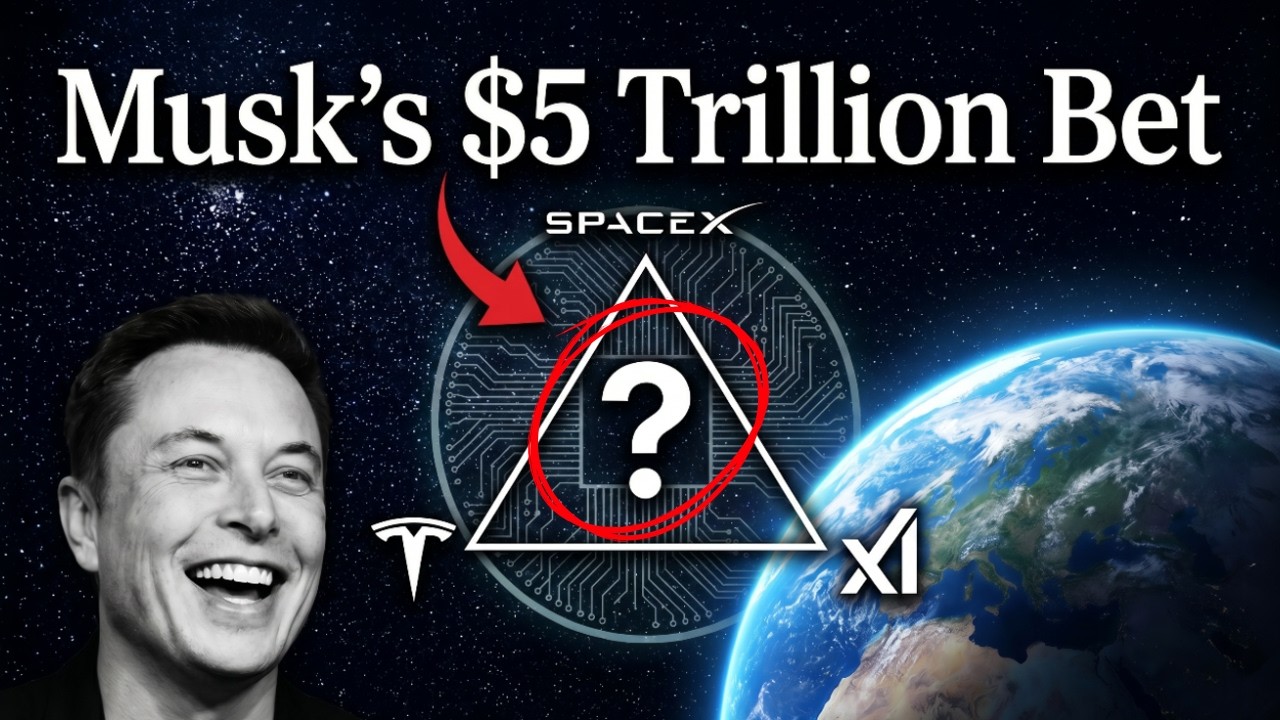

Challenges, Skepticism & Risks
4 clipsNo fab experience; $5-13T full cost; ASML EUV shortages; yields/talent hurdles. Compared to 4680 delays; TSMC/Intel struggles.
Challenges (Water, Power, Yield)
3 clipsMassive water/power needs (10M gal/day, 10GW); rural infrastructure issues; yield optimization critical; timelines aggressive vs TSMC/Intel delays.

Challenges: Yield, Timeline, Experience
3 clipsNo fab experience; TSMC $165B AZ delays. Yields 50-80%; 3-5yr build. 4680 parallels raise doubts.


Chip Manufacturing Process & Recursive Loop
2 clipsTerafab consolidates design, lithography, fabrication, memory production, packaging, and testing under one roof. This creates a 'recursive loop' where engineers can design a chip, test it, revise the mask, and iterate within days rather than the traditional 6-9 month cycle across multiple countries.
Chip Manufacturing Scale & 2% Problem
2 clipsGlobal fabs produce only ~2% of the chips Tesla/SpaceX will need. Terafab targets 1 TW of annual compute—roughly 50× current worldwide AI chip output.

Chip Manufacturing Scale & Output
5 clipsTerafab targets 100,000-1M wafer starts/month, producing 100-200B chips/year at 1TW compute. This dwarfs global AI output (20GW), equaling 70% of TSMC's capacity from one site. Emphasis on massive volume for Tesla/SpaceX/XAI demand.
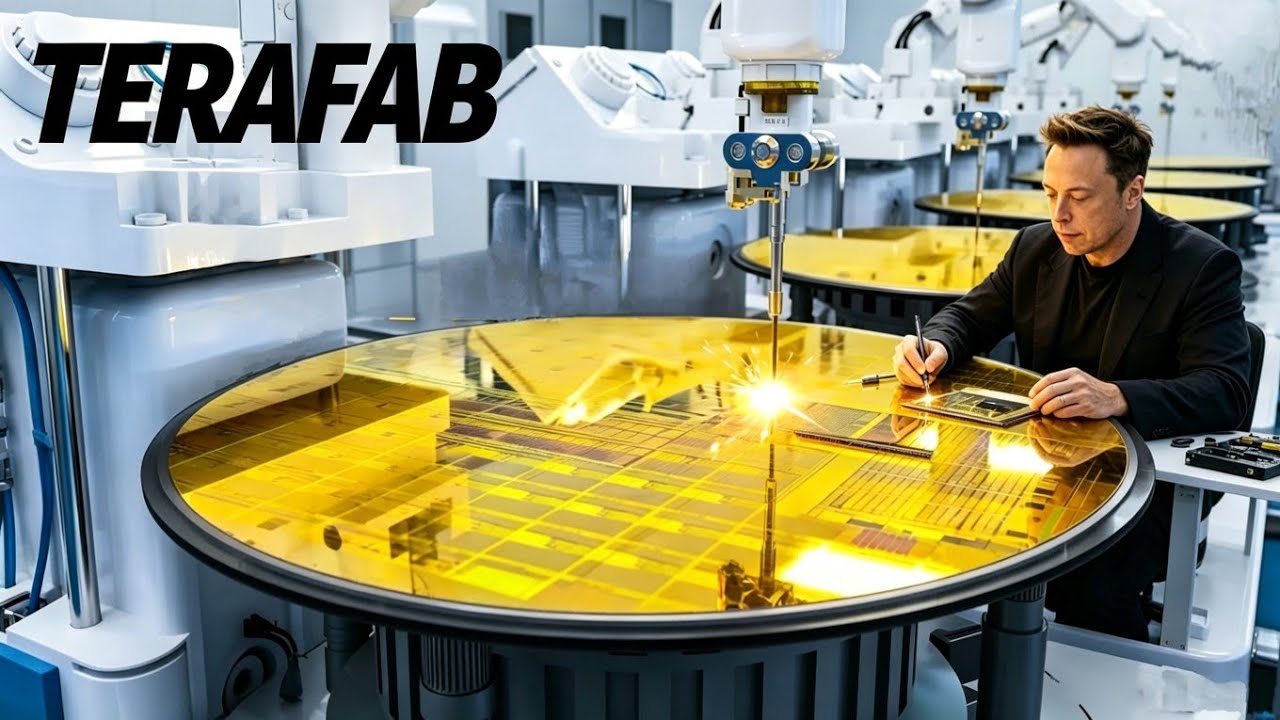

Chip Manufacturing Vertical Integration
1 clipsUnlike traditional semiconductor manufacturing where design, fabrication, and packaging occur across multiple countries, Terafab consolidates all processes under one roof in Austin to enable rapid iteration cycles.
Chip Types: AI5 & D3
2 clipsTwo chip families: AI5/AI6 for terrestrial edge inference in vehicles and Optimus, and D3 radiation-hardened chips for orbital AI satellites.
Comparisons to TSMC/Nvidia
3 clipsTerafab rivals TSMC output; AI5 matches Nvidia H100 at 1/5 power/cost. Fills US memory fab gap.

Comparisons to TSMC/Samsung/Intel
3 clipsTerafab rivals 70% TSMC output from one site. Skeptics cite TSMC's $165B AZ fabs (2nm 2029). Intel partnership hinted; Samsung AI6 deal $16.5B.
Comparisons to TSMC/Samsung/Intel
3 clipsTerafab targets 70% TSMC output from 1 site. Skeptics cite TSMC's $165B AZ fabs (2nm 2029). Intel partnership rumors; Samsung AI6 deal.

Comparison to Existing Fabs
2 clipsTerafab targets 2nm process with 1M wafers/month vs TSMC's 150K, requiring 12 EUV machines vs industry standard, with Intel partnership providing 18A/14A process technology.

Comparison to TSMC and Global Capacity
2 clipsTerafab targets roughly 70% of TSMC's current global wafer output from one site. TSMC spent $165 billion over years for six Arizona fabs that won't reach 2nm until 2029.

Comparison to TSMC and Industry Challenges
2 clipsTSMC spent $165B and 30+ years reaching 2nm; Tesla starts with zero fab experience; yield rates, EUV machine access, and talent shortages pose major hurdles despite Intel partnership.


Comparison to TSMC & Existing Fabs
1 clipsTerafab targets 70% of TSMC’s global wafer output from one site; TSMC spent $165B and 30+ years to reach current 2 nm capability.
Comparison to TSMC & Existing Fabs
1 clipsTSMC spent $165 B and 30 years to reach current scale; Terafab aims to match 70 % of TSMC’s global output from one building in 3–5 years.

Comparison to TSMC & Existing Fabs
2 clipsTerafab targets 70% of TSMC's global output from a single facility. TSMC spent $165 billion over years to build six Arizona fabs that won't reach 2nm production until 2029. Tesla has zero semiconductor manufacturing experience.
Comparison to TSMC & Samsung
2 clipsTerafab targets 70% of TSMC's global output from one site. Intel's 14A process and EMIB packaging provide the manufacturing expertise Tesla lacks, while Samsung's Taylor fab handles initial AI5 production.


Comparison to TSMC & Samsung
2 clipsTerafab targets 70% of TSMC's global output from one site; Intel's 14A process selected over TSMC's 2nm for US-based production.

Comparison to TSMC & Samsung
2 clipsTerafab’s 1 M wafers/month target equals ~70 % of TSMC’s global output; existing suppliers can meet only ~2 % of Tesla/SpaceX demand even at maximum expansion.
Comparison to TSMC, Samsung & Intel
2 clipsTerafab targets 70% of TSMC's global wafer output from one site. Intel's 14A/18A nodes and EMIB packaging are being integrated; Samsung 2 nm is also in use for AI5/AI6.

Comparison to TSMC/Samsung/Intel
2 clipsTerafab targets 70% of TSMC's global output from one site; Intel provides 14A/18A process expertise while Samsung supplies AI5/AI6 initially, creating a Western alternative to Asian foundry dominance.
Competition with TSMC & Nvidia
3 clipsTerafab targets 70% TSMC output; AI5 matches H100 at 1/10 cost. Nvidia fabless; TSMC Taiwan risk. Vertical integration beats supply queues.
Construction Progress & Drone Footage
2 clipsDrone footage shows grading, geo-piers, River Road extension, and steel erection at Giga Texas North Campus. Grimes County site already has 3,135 acres under contract.
Construction Progress Giga Texas
3 clipsDrone footage shows east/north campus excavation for advanced fab (2M sq ft prototype). River Rd extension, Electric Ave. Videos detail grading, power prep.

Construction Progress & Timeline
1 clipsDrone footage shows land clearing 40-50% larger than previous month, footings under construction, River Road extension underway; pilot fab targets 2026 production, full scale 2028-2029.
Construction & Site Preparation
2 clipsSite preparation is actively underway in Grimes County with extensive land clearing of heavily forested terrain, foundation work, and infrastructure development. The 6,640-acre site requires clearing trees, flattening terrain, draining man-made lakes, and relocating utilities. Construction involves building foundations for a facility spanning over 4 miles, with the first steel expected soon and ongoing work on the north campus of Giga Texas.
Construction Techniques & Foundation Engineering
2 clipsGeopier rammed aggregate pier technology compacts expansive clay soils 3-5x, reducing foundation time 20-40% while maintaining micrometer precision for robotic assembly lines.
Construction Timeline & Progress
3 clipsAdvanced fab Austin 2026 pilot; full Terafab 2028-29. Videos show Giga Texas north prep, hiring; 3yrs build +2yrs ramp.

D3 Radiation-Hardened Space Chips
3 clipsD3 chips for orbital AI satellites/data centers. Radiation-hardened, high-power, 80% Terafab output. Survive space environment, enable space AI compute.
D3 Space Chips & Orbital AI Data Centers
4 clipsD3 radiation-hardened chips for space (80% output). Orbital data centers: 5x solar, vacuum cooling, cheaper than Earth in 2-3 years. 1M satellites planned.
D3 Space-Grade Chips
2 clipsD3 chips are radiation-hardened for orbital use, running hotter with passive vacuum cooling, enabling 80% of Terafab output in space.
D3 Space-Hardened Chips
4 clips80% output for D3 chips: radiation-hardened for space, run hotter to minimize mass. Powers orbital AI satellites/data centers. SpaceX FCC filing for 1M satellites.

Digital Optimus / Macrohard
1 clipsParked Teslas as distributed compute via Macrohard. Videos describe Grok directing, Optimus executing screen tasks. $650 AI unit scales.
Dual Chip Lines: Earth vs Space
2 clipsAI5/AI6 inference chips for Optimus and Cybercab on Earth; D3 radiation-hardened chips for orbital AI satellites, with 80% of output allocated to space-based compute.
Earth Chips: AI5/AI6 for Optimus/FSD
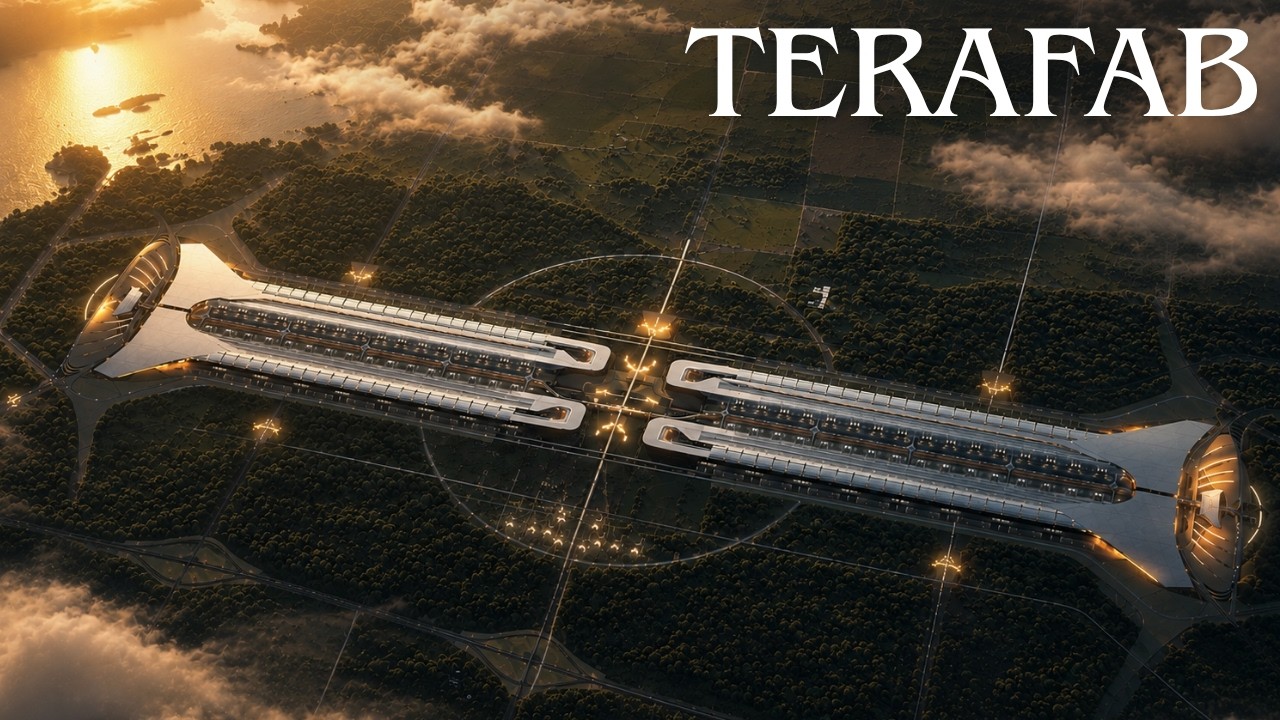
4 clipsTerafab produces AI5/AI6 for edge inference in Tesla vehicles, Cybercab, Optimus (10-100x car volume: 1-10B/year). Optimized low-power, high-performance for robotics/autonomy.
Earth Chips: AI5 for FSD & Optimus
3 clipsAI5 chip (5x AI4 compute, 9x memory) for vehicles, Cybercab, Optimus. Terafab enables mass production for millions of robots (10-100x car volume). Optimus production ramps to 1M/year Fremont, 10M/year Texas.
Earth vs Space AI Deployment
4 clipsEarth grids overload (0.5TW US total); space: 5x solar, vacuum cooling, no land/grid limits. 80% output orbital; cheaper in 2-3yrs via Starship.
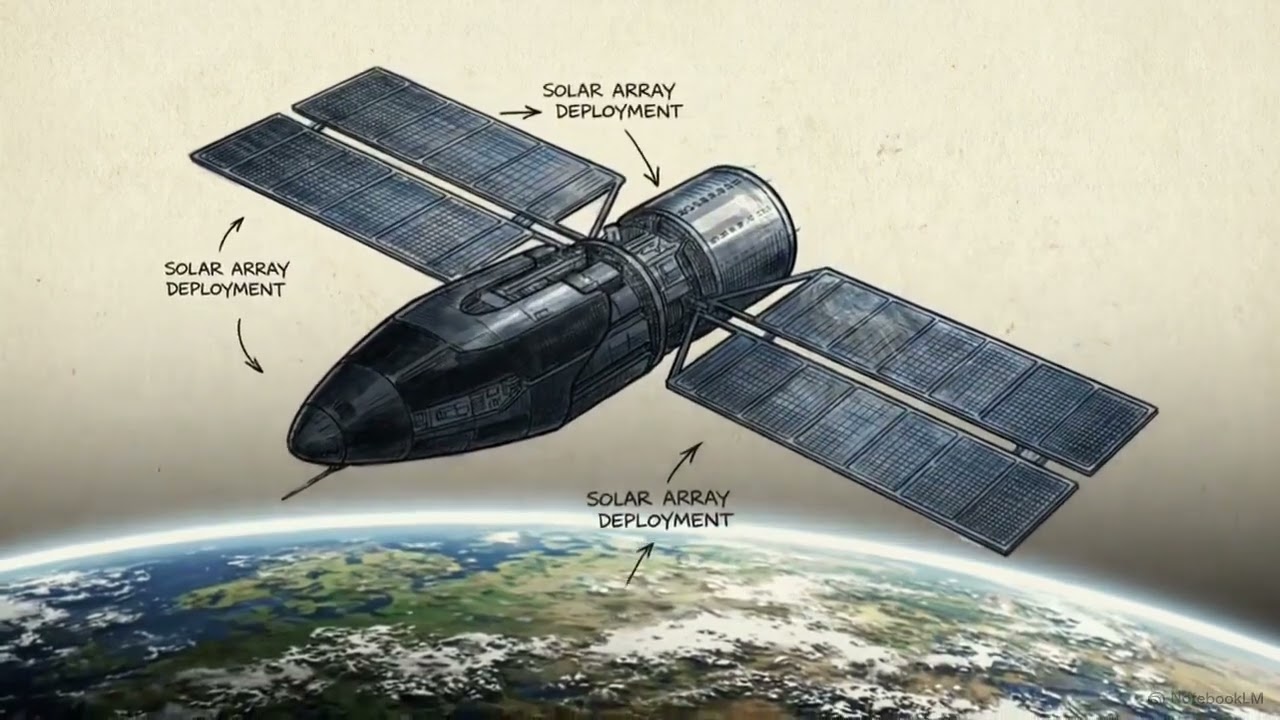

Economic Abundance & Post-Scarcity
2 clips1B Optimus robots eliminate poverty; universal high income. AI/robotics 10-100x economy; free goods/services via abundance.

Economic and Investment Scale
3 clips$5-13T capex estimates; Bernstein 142-358 fabs needed. Videos debate trillion-scale, SpaceX IPO funding, risk vs. reward.

Economic Impact and Savings
3 clipsTrillions in savings via vertical integration; $2.5T over 10 years napkin math; 12x ROI; excess capacity for external sales.
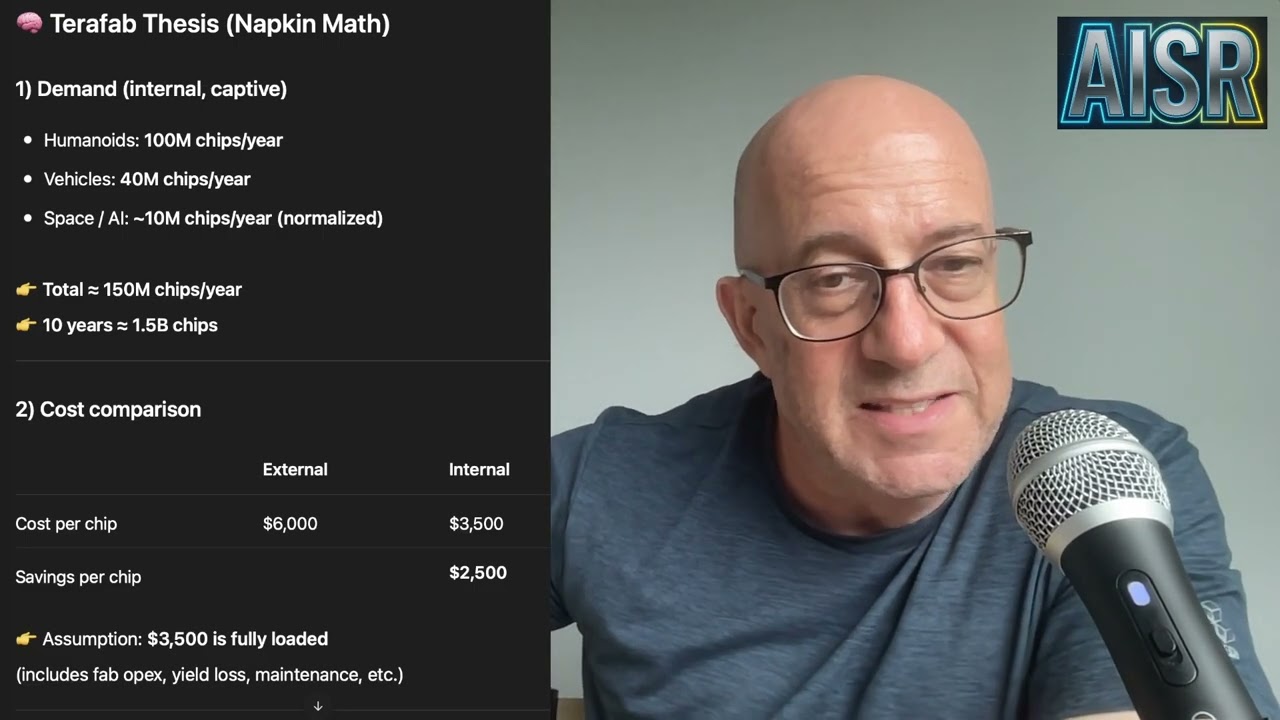
Economics & Funding via SpaceX IPO
2 clipsSpaceX’s planned $50–75 B IPO is expected to fund the multi-trillion-dollar long-term Terafab build-out.


Economics & Post-Scarcity Abundance
3 clipsTerafab enables cheap AI/robots for universal high income, poverty elimination. Infinite money glitch via scale.
Edge Inference Chips for Tesla/Optimus
3 clipsAI5/AI6 chips optimized for low-power edge inference in vehicles (FSD, Cybercab) and Optimus robots. 40-50x AI4 performance, 9-10x memory. Billions needed as robots scale 10-100x car volumes.
Edge vs Space Chip Design
3 clipsTwo chip types planned: edge inference chips for Optimus robots and vehicles (AI5/AI6), and radiation-hardened space chips designed to run hotter and handle the hostile orbital environment.

Energy Constraints & Space Solar
3 clipsEarth power grids limit AI (0.5TW US total); space solar 5x irradiance, constant, vacuum cooling. Terafab enables 1TW/year; lunar mass driver for pedawatt scale. Solves terrestrial bottlenecks.

Energy & Power Requirements
2 clipsTerafab requires over 10GW of power at full scale. Space-based solar provides 5x more energy than terrestrial panels with 24/7 availability in sun-synchronous orbit.
EUV Lithography & Equipment Needs
2 clips2nm process requires high-NA EUV machines costing $350–400M each from ASML; 50+ machines needed with 18–24 month lead times; only 50–60 produced globally per year.
EUV Machines & ASML Bottleneck
1 clipsTerafab would need hundreds of $400M EUV scanners; ASML ships only ~50 per year, creating a multi-year global supply constraint.
FSD and Cybercab Integration
2 clipsAI5 chips power FSD Cybercab (250W Hopper-class); unsupervised rides in Austin. Terafab ensures supply for fleets, digital Optimus macrohard.
FSD/Cybercab Robotaxi Chips
2 clipsAI5/AI6 for FSD, Cybercab, Optimus inference. Videos tie Terafab to unsupervised autonomy, robotaxi fleets. Matches Nvidia performance cheaper.
FSD & Vehicle Chip Integration
2 clipsAI5/AI6 for FSD/Cybercab/Optimus edge inference; 40-50x AI4 performance. Terafab enables fleet-scale autonomy; macrohard uses parked cars.

Galactic Civilization & Kardashev Scale
3 clipsMusk frames Terafab as essential for advancing humanity to a Type 1 Kardashev civilization by harnessing solar energy in space, enabling multi-planetary expansion. He emphasizes scaling power and compute to galactic levels, turning science fiction into reality through AI, robotics, and space infrastructure. Videos highlight Musk's vision of abundance, cities on Mars, and exploring star systems.
Galactic Civilization Vision
4 clipsMusk frames Terafab as a stepping stone toward becoming a multi-planetary, galactic civilization. He references the Kardashev scale and envisions humanity expanding to the Moon, Mars, Saturn, and beyond.
Galactic Civilization Vision
3 clipsElon Musk frames Terafab as the key to advancing humanity toward a Kardashev Type 2 civilization by harnessing solar energy in space for massive AI compute. The project enables scaling power and intelligence beyond Earth's limits. This vision integrates Tesla, SpaceX, and xAI to build multi-planetary infrastructure.
Geopolitical Strategy & US Chip Independence
2 clipsTerafab positioned as national security imperative to reduce US dependence on Taiwan's TSMC; Intel partnership ensures American manufacturing control over critical AI infrastructure.
Geopolitical Supply Chain Risks
1 clips90% of advanced AI chips are manufactured in Taiwan, creating unacceptable strategic risk for Tesla's multi-planetary ambitions, driving the need for domestic US manufacturing capability.
Geopolitical Taiwan Risk
2 clipsTerafab reduces US dependence on Taiwan's 90% share of advanced chips, mitigating supply chain risks from China-Taiwan tensions.

Giga Texas Construction Progress
3 clipsDrone footage shows north campus grading for advanced fab; River Rd extension. 2M sq ft prototype. Videos detail site prep.


Giga Texas Construction Progress
2 clipsDrone footage shows land grading, steel framing, and foundation work already underway on the north campus prototype site adjacent to existing Gigafactory structures.
Giga Texas Construction Progress
1 clipsDrone footage shows active site preparation at Giga Texas north campus for the advanced technology fab and Optimus production lines.
Giga Texas Site Preparation
1 clipsDrone footage shows 3,135 acres cleared at Gibbons Creek; River Road widening and heavy equipment movement confirm active civil works.
Global Chip Supply Chain Crisis
2 clipsCurrent global semiconductor capacity meets only 2% of combined Tesla, SpaceX, and xAI demand. The structural gap cannot be fixed with purchase orders—existing industry cannot scale fast enough.

Global Chip Supply Crisis
3 clipsCurrent global fabs produce only 2% of Musk's companies' future needs; TSMC/Samsung can't scale fast enough for Tesla/Optimus/SpaceX demand. Terafab addresses this bottleneck. Videos stress 20GW vs 1TW gap.
Global Chip Supply Only 2% Sufficient
4 clipsMusk claims all Earth fabs produce just 2% of Tesla/SpaceX/XAI future needs. Current 20GW AI compute falls short of 1TW target. Terafab addresses this existential bottleneck for AI/robotics/space.
Global Chip Supply Shortage
4 clipsCurrent global fabs produce only 2% of Tesla/SpaceX/xAI chip needs, creating a bottleneck for AI, robots, and space compute. Suppliers like TSMC/Samsung can't scale fast enough. Terafab solves this by massive in-house production.
Global Chip Supply Shortage (2% Problem)
5 clipsMusk claims existing fabs meet only 2% of Tesla/SpaceX/xAI needs, forcing Terafab. Videos stress urgency for AI/robotics/space demand outpacing TSMC/Samsung. Emphasis on supply chain fragility and geopolitical risks.
Global Supply Chain Bottleneck
2 clipsExisting foundaries (TSMC, Samsung, Micron) can only meet 2-3% of Tesla/SpaceX future demand. Even best-case expansion scenarios fall short. Geopolitical risks in Taiwan add urgency for domestic US production.
Global Supply Chain Bottleneck
2 clipsExisting foundries (TSMC, Samsung, Micron) can only meet 2-3% of projected demand. Geopolitical risks in Taiwan and capacity constraints force vertical integration as a survival strategy.
Global Supply Chain Bottlenecks
2 clipsCurrent suppliers can only meet 2-3% of projected demand. Geopolitical risks in Taiwan and capacity constraints drive the need for domestic US production.
Grimes County Site Development
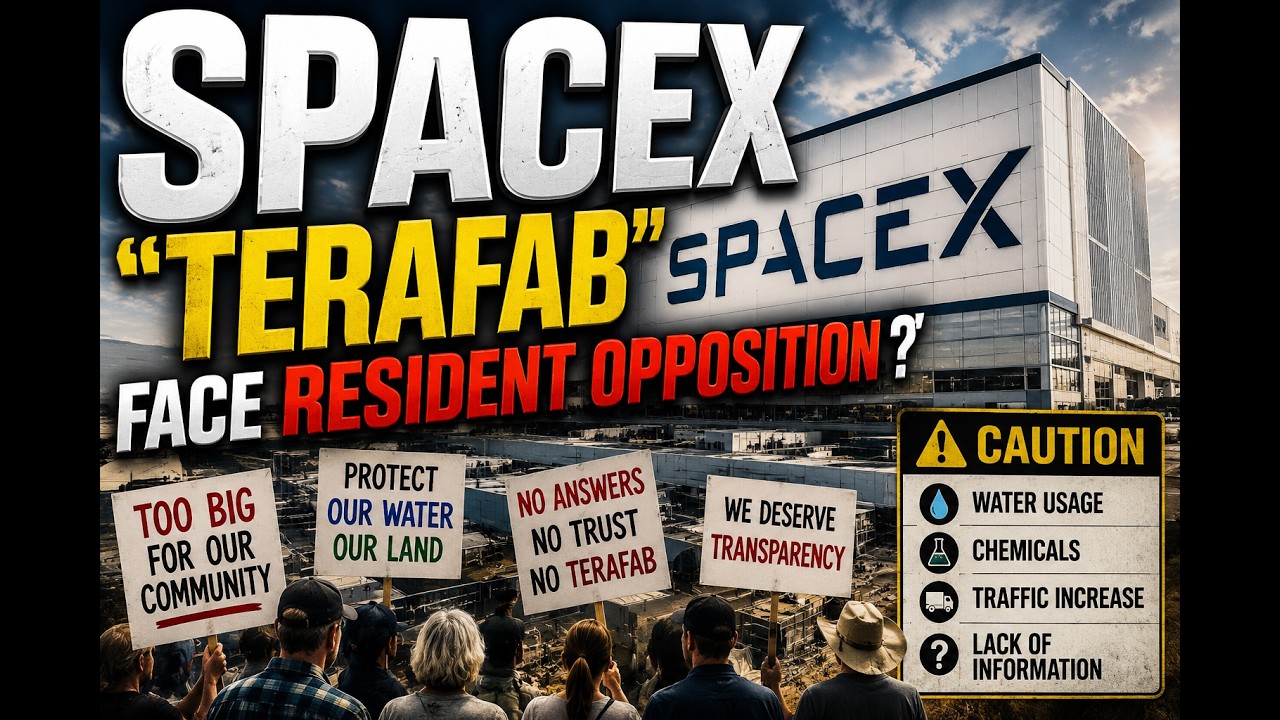
1 clipsSpaceX acquired 3,135 acres near Gibbons Creek Reservoir; county approved tax abatement with $5B minimum investment commitment by 2030.
Grimes County Tax Incentives & Local Impact
2 clipsGrimes County approved 100% property tax exemption 2027-2036 plus $710 million in payments over 35 years, despite resident concerns about water supply and traffic.
Industry & Investor Reactions
3 clipsJensen Huang 'never seen so fast'; Fidelity models orbital economics; Sequoia investor roasts skeptics. Videos mix hype (100T cap), doubt (Intel losses), excitement (US sovereignty).


Industry Reactions and Partnerships
3 clipsIntel joins for 18A node; Samsung offers capacity. Nvidia praises speed; TSMC skeptical. Analysts split on feasibility.


Industry Skepticism & Reactions
3 clipsExperts doubt yields/timelines (TSMC CEO: no shortcuts). Stock surges (Tesla +7.5%). Intel joins; Samsung cautious.
Insane Production Scale Targets
3 clips1 million wafer starts/month (70% TSMC global), 100-200B chips/year, 1TW compute. Starts with 100k WSPM Austin prototype. Cost $20-25B+.
Intel 14A / 18A Technology Partnership
1 clipsIntel supplies 18A/14A process node and EMIB/Foveros packaging, giving Terafab immediate access to proven sub-5nm capability and US-based manufacturing expertise.

Intel 14A Partnership
1 clipsIntel joined as manufacturing partner providing 14A/18A process technology and EMIB packaging, giving Tesla access to advanced nodes while Intel gains its first major external customer for the foundry business.
Intel 14A Process Technology
1 clipsTerafab will use Intel's 14A (1.4nm) process node with ribbon FET and backside power delivery, Intel's first major external customer for this technology.
Intel 14A Technology Risk
1 clipsTerafab's most ambitious form depends on Intel successfully ramping 14A; double risk of new node + new customer at unprecedented scale.
Intel Partnership & 14A/18A Process
2 clipsIntel joins as manufacturing partner providing 18A/14A process technology, EMIB packaging, and experienced fab engineers; Tesla's first major external customer for 14A.
Intel Partnership and Manufacturing Expertise
3 clipsIntel joins as manufacturing partner providing 14A/18A process technology and EMIB packaging. The partnership supplies decades of fab experience that Tesla lacks, with Intel gaining its first major external customer for advanced nodes.

Intel Partnership Details
1 clipsIntel provides 14A/18A process technology, EMIB packaging, and experienced fab engineers; Intel Foundry gains anchor customer to validate its turnaround.
Intel Partnership Discussions
3 clipsIntel joins Terafab for manufacturing expertise, 2nm tech, packaging; anchor customer for Intel foundry amid losses. Musk visited Intel facilities.

Intel Partnership & Manufacturing Expertise
2 clipsIntel joined Terafab as a manufacturing partner in April 2026, contributing its 18A/14A process technology and advanced packaging expertise. This addresses Tesla's lack of semiconductor fabrication experience by importing decades of institutional knowledge. Key hires include Gary Jang, a 17-year Intel veteran who oversaw 18A manufacturing operations, named as Terafab's first director. The partnership provides access to Intel's institutional expertise in atomic-level precision manufacturing.
Intel Partnership Role
3 clipsIntel joins for 2nm tech, packaging; anchor customer for foundry losses. Videos note shares jump 3%, fills Tesla fab expertise gap.


Intel Partnership Rumors
4 clipsIntel joins Terafab for fab expertise, 2nm tech, packaging; anchor customer lifeline. Videos note Intel losses, turnaround via Musk ecosystem.
Intel Partnership Speculation
3 clipsIntel joins Terafab for fab expertise, 2nm tech, packaging. Musk visited Intel HQ; shares +3%. Intel needs anchor customer amid losses.
Investment: $20-25B Initial, Trillions Full Scale
3 clips$20-25B startup phase outside 2026 $20B capex. Full 1TW: $5-13T (Bernstein). SpaceX IPO funds; risks like 4680 delays.
Investment and Capex Requirements
3 clipsInitial $20-25B capex (not in 2026 $20B plan); full 1TW vision $3-13T. Skeptics cite TSMC's $165B Arizona fabs (2nm 2029); Tesla risks $45B ops costs.

Investment and Economic Scale
2 clipsInitial phase costs 20-25 billion with long-term estimates reaching 5-13 trillion. The project is positioned as essential infrastructure rather than optional expansion.
Investment, Capex & Economics
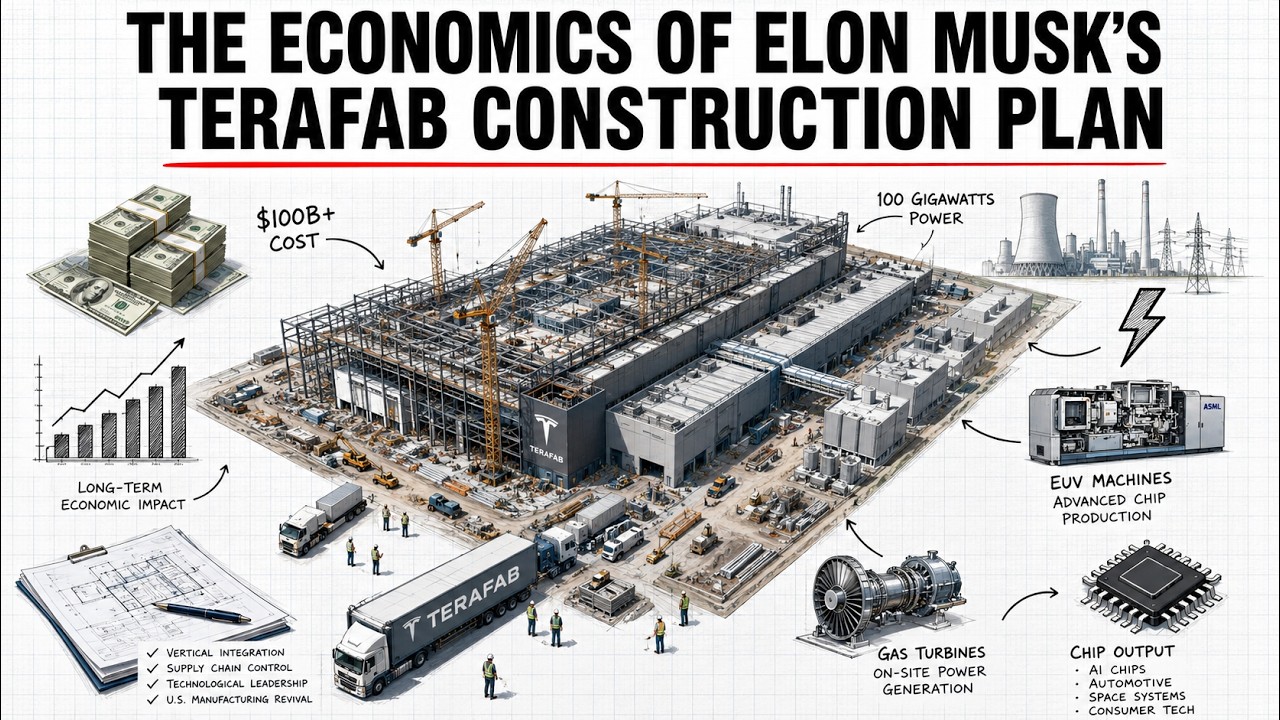
2 clips$20-25B initial outlay plus $3B R&D fab; 10 GW power requirement; potential $5-13T total buildout; SpaceX IPO expected to help fund orbital phase.

Investment & Capex Requirements
3 clips$20-25B initial (not in 2026 $20B capex), full $300B+. Videos project 142-358 fabs for 1TW, SpaceX IPO funds, energy/robot revenue covers.
Investment, Capex & Risks
3 clips$20-25B initial, $5-13T full 1TW vision. Not in 2026 $20B capex. Skeptics cite 4680 delays, fab complexity.
Investment Costs & Execution Risks
3 clips$20-25B initial (not in 2026 $20B capex); full 1TW vision $5-13T/142-358 fabs. Risks: no fab experience, ASML delays, yields; parallels 4680/Dojo setbacks.
Investment & Cost Structure
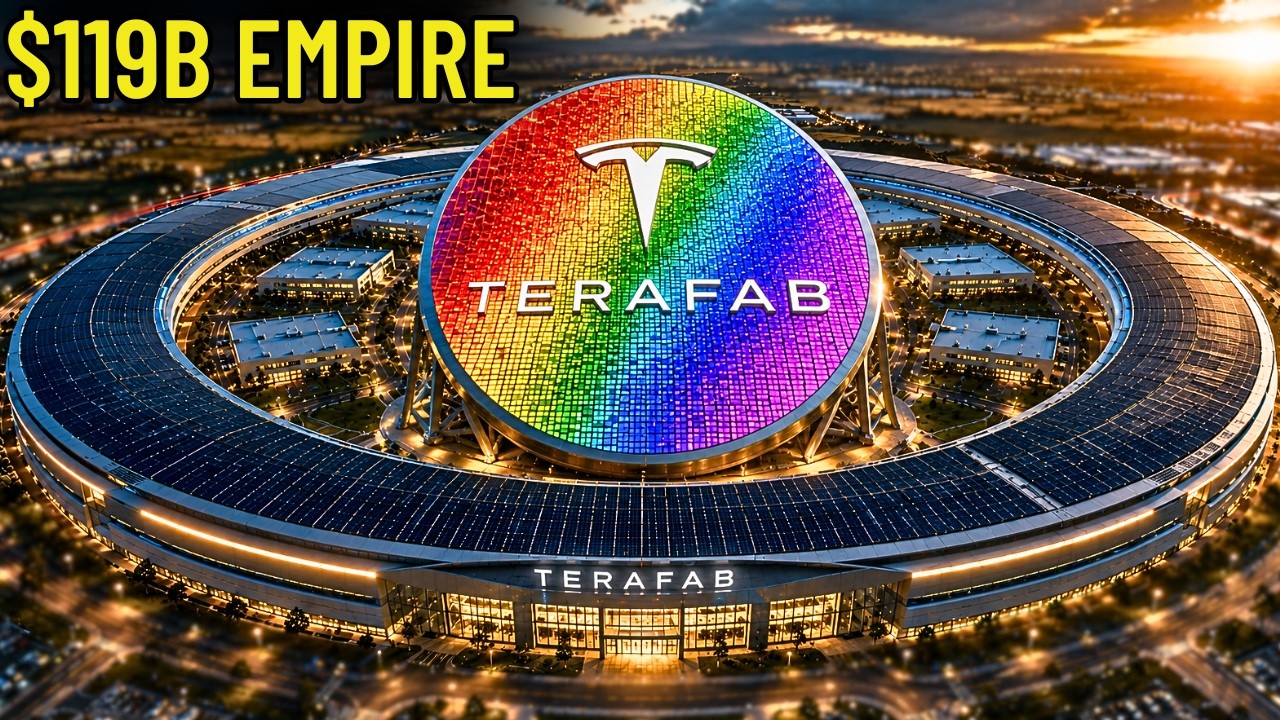
2 clipsThe project spans multiple investment phases with initial commitments of $16.8 billion, scaling to $55-119 billion across full development. SpaceX has committed a minimum of $5 billion by 2030 with 1,800 jobs required by 2035, though public projections suggest much larger totals. The $119 billion figure represents a 'general framework' rather than a binding commitment, with actual spending structured through tax abatement agreements and phased development.


Investment & Economic Challenges
3 clips$20-25B initial, $5-13T full 1TW; capex beyond 2026 $20B plan. Skeptics cite 4680 delays; Bernstein $5T+ total. Funding via SpaceX IPO.
Investment Economics & SpaceX IPO
2 clipsThe $25B initial investment escalates to $119B across phases, with SpaceX's IPO potentially raising $75B to fund the project, creating tension between binding minimum commitments and headline projections.
Investment Scale and Cost Estimates
3 clipsDiscussions highlight $20-25B initial investment scaling to $119B or trillions long-term, with comparisons to TSMC's $165B Arizona fabs and napkin math showing trillions in savings over 10 years.

Investment Scale and Economic Impact
3 clipsInitial $20-25 billion investment scales to $55-119 billion across phases. The project creates 1,800-3,000 high-skill jobs with $710 million in county payments over 35 years, transforming Grimes County's tax base by 500%.
Investment Scale & Economics
2 clipsPhase-1 commitment $55 B; total build-out up to $119 B. SpaceX IPO expected to fund the bulk. 35-year $710 M tax deal with Grimes County; $5 B minimum spend by 2030.
Investment Scale & Economics
1 clipsInitial $20-25B phase one, with full buildout potentially reaching $119B-$5T; SpaceX IPO targeting $50B+ to fund orbital infrastructure; ROI calculations suggest 12x returns over 10 years from chip cost savings.
Investment Scale, Economics, and Risks
2 clips$25B initial outlay could reach $5-13T at full scale; Intel partnership mitigates expertise gap but yield, EUV access, and 5-year timelines remain major risks.
Investment Scale & Financial Structure
2 clipsInitial investment $55 billion with potential full buildout reaching $119 billion. SpaceX committed to minimum $5 billion by 2030 with 1,800 jobs, while public figures suggest much larger scope.
Iteration Speed and Recursive Improvement Loop
2 clipsCo-located design, mask-making, fabrication, and testing enables 7-9 day chip iteration cycles versus 6-9 months in traditional supply chains. This 10x faster loop accelerates AI hardware evolution.

Job Creation & Local Economic Impact
2 clipsProjected 3,000+ high-paying jobs with $120-180K salaries; $710 million in tax payments over 35 years; local hiring commitments and workforce development programs.
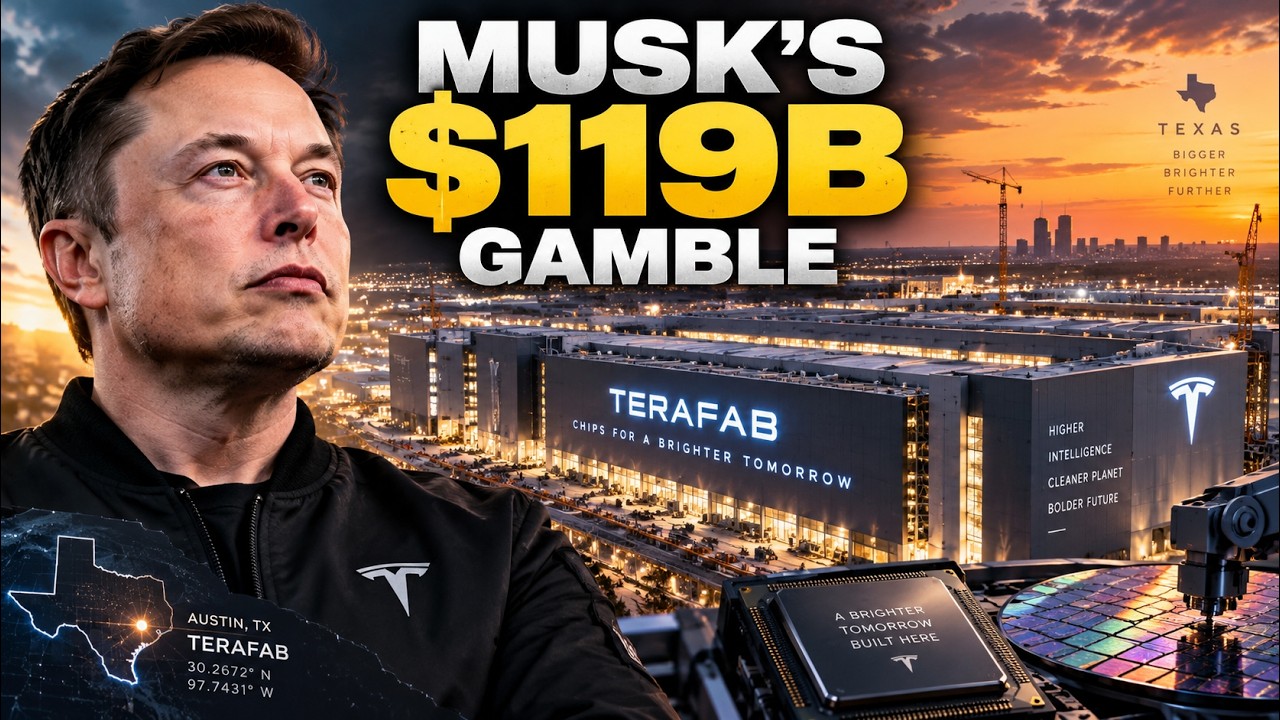
Kardashev Scale and Galactic Civilization Vision
3 clipsMusk frames Terafab as the foundation for humanity becoming a Type 1 civilization by harnessing planetary energy, then scaling to Type 2 by capturing stellar power through orbital infrastructure. The vision extends to lunar mass drivers and multi-planetary expansion, positioning AI compute as the engine for galactic-scale abundance.

Kardashev Scale and Galactic Vision
3 clipsMusk invokes Kardashev scale: Type 1 (planet energy), Type 2 (star), Type 3 (galaxy). Terafab enables scaling to terawatt compute for multi-planetary life. Abundance via AI/robots, cities on Moon/Mars, mass driver launches.
Kardashev Scale & Galactic Civilization
2 clipsMusk frames Terafab as the first step toward humanity becoming a Type 1 civilization that harnesses all planetary energy, then Type 2 by capturing solar output, ultimately enabling a multi-planetary species with cities on the Moon and Mars.
Kardashev Scale & Galactic Civilization
2 clipsMusk frames Terafab as the first step toward a Type 1 civilization that harnesses all planetary energy, then Type 2 by capturing the sun's full output through orbital infrastructure.
Kardashev Scale & Galactic Civilization Vision
2 clipsMusk frames Terafab as the foundation for humanity becoming a multi-planetary, then galactic civilization. He introduces the Kardashev scale, explaining that Type 1 harnesses planetary energy, Type 2 harnesses stellar energy, and Type 3 harnesses galactic energy. Terafab represents the first step toward harnessing the sun's power through orbital infrastructure.
Moon and Mars Expansion via Mass Driver
3 clipsLong-term vision includes lunar mass driver launching compute nodes into deep space using electromagnetic acceleration. Moon's lower gravity and lack of atmosphere enable efficient payload launches without chemical rockets.
Moon & Mars Expansion Plans
2 clipsLunar mass driver powered by Optimus robots will launch pedawatts of compute into deep space. Moon base becomes the stepping stone to Mars and beyond.
Moon & Mars Expansion Plans
2 clipsLong-term vision includes a lunar mass driver and self-replicating Optimus colonies. Terafab chips would power both lunar and Martian infrastructure.
Moon Mass Driver & Expansion
3 clipsElectromagnetic launcher on Moon with Optimus. Pedawatt compute to deep space. Abundance via robots/solar.

Moon Mass Driver & Expansion
2 clipsPost-Terafab: Moon mass driver launches pedawatt compute; Optimus mines regolith. Videos detail low-gravity EM rail for deep space.
Moon Mass Driver & Expansion Plans
2 clipsLong-term vision includes electromagnetic mass driver on the moon to launch AI satellites into deep space, enabling Kardashev Type-2 civilization with pedawatt-scale compute.
Moon Mass Driver & Lunar Base
1 clipsElectromagnetic mass driver on the moon powered by Optimus robots and solar arrays to launch petawatt-scale compute into deep space.
Moon Mass Driver & Lunar Base
1 clipsLong-term vision includes electromagnetic mass driver on the Moon to launch compute nodes into deep space, operated by Optimus robots, enabling Kardashev Type 2 civilization scale.
Moon Mass Driver Vision
2 clipsElectromagnetic mass driver on Moon launches payloads sans rockets; Optimus robots build it. Pedawatt compute to deep space; Type 2 civilization step.
Musk's CEO Evolution
2 clipsVideos discuss Musk's transition from software entrepreneur to hardware CEO, highlighting his early reluctance and eventual embrace of CEO responsibilities at Tesla and SpaceX. Emphasis on his engineering mindset and control over product vision. Parallels drawn to Steve Jobs.

Nvidia Threat & Competition
3 clipsTerafab threatens Nvidia dependency; AI5 matches H100 at fraction cost/power. Eliminates Nvidia margins; CUDA moat vs Tesla ecosystem.
Optimus Integration Demand
4 clipsOptimus drives 80% wafer demand, targeting 1-10B units/year (10-100x cars). AI5/AI6 for edge inference. Videos link Terafab to billion-robot scale, factory deployment.
Optimus Integration & Scale
3 clipsOptimus drives demand (1-10B/year, 10-100x cars); AI5 powers edge inference. Fremont 1M/year line, Giga Texas 10M/year; robots build Terafab/moon base.
Optimus Production Demands
3 clipsOptimus drives chip need: 10-100x car volume (1-10B/year). Terafab enables scaling to millions Optimus.
Optimus Production & Factory Role
3 clipsOptimus drives chip demand (1-10B/year); robots build/operate Terafab/moon base.
Optimus Production Plans
3 clips1M/year Fremont line 2026, 10M/year Giga Texas. $20K COGS target. Robots build Terafab, enable abundance.
Optimus Production Ramp
3 clipsOptimus drives 80% chip demand; 1-10B/year (10-100x cars); Fremont 1M/yr line 2026, Texas 10M/yr. $20K COGS target; digital Optimus (macrohard) on parked fleet.
Optimus Production & Terafab Integration
3 clipsOptimus drives chip demand (100M-1B/year). Terafab AI5 powers robots (20% output). Fremont 1M/year line, Texas 10M/year.
Optimus Robot Chip Demand
2 clipsOptimus production requires 20 million chips annually at Fremont's 1 million unit target—6x Tesla's current automotive chip demand. Long-term goal of 10-100x automotive volume creates unprecedented semiconductor requirements.


Optimus Robot Chip Demand
1 clipsOptimus humanoid robots are projected to require 10-100x the chip volume of Tesla's entire automotive business, with 1-10 billion units annually needing AI5/AI6 inference chips.
Optimus Robot Chip Demand
1 clips1–10 billion humanoid robots per year will require 10–100× the chip volume of Tesla’s entire car business.
Optimus Robot Chip Integration
2 clipsAI5/AI6 inference chips power billions of Optimus units; robot production projected at 1-10 billion units/year, dwarfing automotive chip demand.
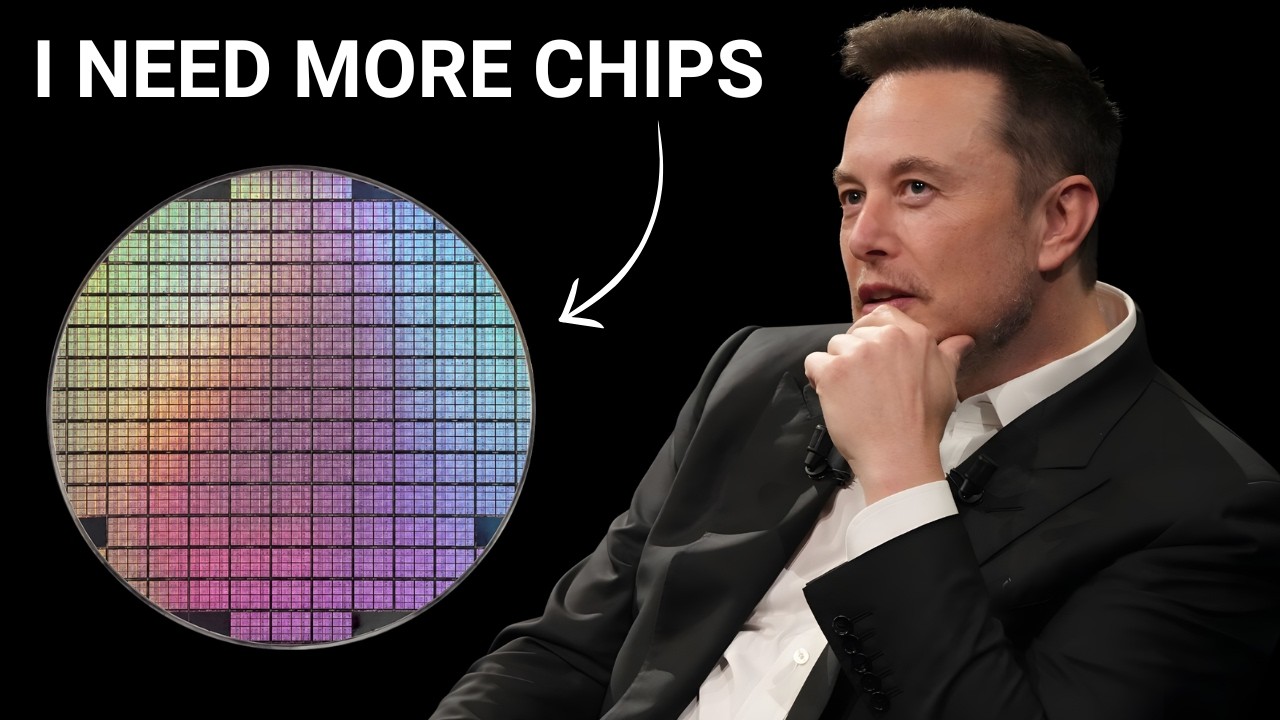
Optimus Robot Integration
2 clipsAI5/AI6 chips power Optimus humanoid robots requiring 10-100x automotive chip volume; 1-10 billion robots projected annually, each needing dozens of specialized microcontrollers and inference processors.

Optimus Robot Integration
2 clipsOptimus Gen 3 robots will operate Terafab's clean rooms, with AI5 chips powering both the robots and the chips they help manufacture in a self-reinforcing loop.
Optimus Robot Production & Integration
2 clipsTerafab will supply AI5/AI6 inference chips for 1-10 billion Optimus humanoid robots annually, with robots themselves operating the chip fab in a self-reinforcing production loop.
Optimus Robot Production Scale
2 clipsMusk projects 1-10 billion humanoid robots annually—10-100x car production volume. Each robot requires multiple AI chips, making Optimus the primary terrestrial driver of Terafab output alongside Cybercab and FSD.
Optimus Robot Production Scale
3 clipsMusk expects humanoid robot production to reach 1-10 billion units annually - 10-100x the volume of global car production. Optimus robots will require massive chip supply.
Optimus Robot Production Targets
2 clipsFremont line targets 1 million Optimus/year; Giga Texas targets 10 million/year. Each robot needs multiple AI chips; 25% of Terafab output allocated to terrestrial applications.

Optimus Robot & Terrestrial Chip Demand
2 clips20% of output supports Optimus (1-10 billion units/year target) and Cybercab; each robot needs multiple high-end AI chips, driving demand far beyond current auto needs.
Orbital AI Data Centers
4 clipsSpaceX plans up to 1 million data center satellites with 100kW mini-sats scaling to megawatt range. Cost of AI deployment in space may undercut Earth within 2-3 years.
Orbital AI Data Centers
2 clips80% of Terafab output targets space-based AI satellites using constant solar power and vacuum cooling, making orbital compute cheaper than terrestrial within 2-3 years.

Orbital AI Data Centers
5 clips80% chips for sun-synchronous satellites (100kW mini to MW scale); 5x solar flux, vacuum cooling cheaper than Earth in 2-3 years. 1M satellites planned.
Orbital AI Data Centers & Space Compute
5 clips80% chips for space satellites (1M planned); 5x solar efficiency, vacuum cooling. Cheaper than Earth in 2-3 years. Videos detail sun-synchronous orbits, mass drivers on Moon.
Orbital AI Satellite Constellation
1 clipsSpaceX filed for 1 million AI satellites in sun-synchronous orbit; each 100kW+ satellite forms part of orbital data center network with constant solar power.
Orbital AI Satellites & D3 Chips
3 clips80% of Terafab output powers 1 million AI satellites in sun-synchronous orbit; D3 radiation-hardened chips enable 24/7 solar-powered space data centers with free radiative cooling.


Orbital Solar Power and Cooling Advantages
3 clipsSpace-based solar provides 5x more irradiance than Earth's surface with 24/7 availability in sun-synchronous orbits. Vacuum enables passive radiative cooling, eliminating terrestrial power grid and water constraints for massive AI clusters.
Partnerships and Skepticism
3 clipsIntel partnership for 18A process; Samsung Taylor fab support. Skeptics cite Tesla's zero fab experience vs TSMC's decades; 4680 delays as caution.
Partnerships (Intel, Samsung, TSMC)
3 clipsIntel joins for 18A/14A process; Samsung $16.5B AI6 deal in Texas; TSMC/Samsung for AI5; bridge to in-house Terafab.
Partnerships & Suppliers (Intel/Samsung)
4 clipsIntel joins for 18A process/expertise; Samsung Taylor Fab AI6 ($16.5B deal). TSMC AI5. Videos: Intel refactors fab tech; Samsung counter-proposal.
Partnerships with Intel/Samsung
3 clipsIntel joins for 14A/18A tech; Samsung $16.5B AI6 deal Taylor fab. Bridge to in-house.
Partnerships with Intel/Samsung/TSMC
3 clipsIntel joins for 14A/18A process. Samsung $16.5B AI6 deal, TSMC AI5. Bridge to Terafab self-sufficiency.
Power Constraints and Space Advantages
3 clipsEarth grids limited (0.5TW US total); space offers 5x solar, vacuum cooling. Orbital AI cheaper in 2-3yrs. Sun-synchronous orbits for constant power.
Power Constraints and Space Solar
3 clipsEarth grids limit to 100-200GW additions; space offers 5x solar, vacuum cooling. Videos stress sun-synchronous orbits, no night/clouds, cheaper space AI.
Power Constraints: Earth vs Space
3 clipsEarth grids limit AI (US 0.5TW total); space offers 5x solar, vacuum cooling. Orbital sats cheaper in 2-3 years; Terafab enables TW-scale off-planet compute.
Power / Energy Constraints
4 clipsEarth grid 0.5TW limits; space solar 5x stronger, constant. Orbital sats solve power/heat; Terafab enables.
Power & Energy Requirements
2 clipsThe facility requires over 10 gigawatts of power at full scale. Space-based solar provides 5x more energy than terrestrial panels with no day-night cycle. Earth-based power grids cannot support terawatt-scale compute.
Power Requirements & Energy Infrastructure
2 clipsSingle facility requires 500 MW—equivalent to 400,000 American households—with plans for 10+ GW at full scale, driving the need for space-based solar power.
Power Requirements & Solar
3 clipsTerafab requires 400-700 MW continuous power with 10+ GW at full scale; 80% of chips target space-based solar power with 5x irradiance and vacuum cooling.
Power & Solar Constraints
3 clipsEarth power limits AI (0.5TW US total). Space 5x solar, vacuum cooling. 100GW solar/year Tesla/SpaceX.
Power & Solar in Space
3 clipsSpace solar 5x Earth (no atmosphere/night); vacuum cooling. Terafab enables 1TW compute; Starship launches 10M tons/year. Moon mass driver for pedawatt scale.
Power, Solar & Space Energy
3 clipsSpace solar 5x Earth irradiance, constant sunlight solves grid limits. 10M tons/year launch for 1TW solar/compute. Videos explain radiators, sun-synchronous orbits.
Power & Water Infrastructure
2 clipsRequires 10+ GW of power with dedicated natural gas plants; water sourced from Gibbons Creek Reservoir; environmental concerns raised by local residents about drought impact.
Production: 1M Wafers/Month by 2027
3 clips100K wafers/month initial, 1M full (70% TSMC output). AI5 small batch 2026, volume 2027. $20-25B capex.
Production Scale & 1 Terawatt Targets
4 clipsTerafab aims for 100,000-1M wafer starts/month, producing 100-200B chips/year at 1TW compute. This dwarfs US output (0.5TW electricity) and global AI capacity (20GW/year). Full vision requires $5-13T, 142-358 fabs.
Recursive Improvement Loop
2 clipsSingle-building integration enables 7-9 day chip iteration cycles vs traditional 6-month loops, with design-test-fix-deploy happening in adjacent rooms rather than across continents.
Recursive Iteration & Speed Advantage
4 clipsSingle-facility loop: design-mask-fab-test-revise in days vs months. 10x faster improvement; compresses dev cycles. Key to physics limits/outpacing industry.
Recursive Loop Innovation
2 clipsBy co-locating design, mask-making, fabrication, and testing, engineers can iterate chip designs in days rather than the industry-standard 3-6 months.
Recursive Loop & Iteration Speed
2 clipsVertical integration enables 7-day chip iteration cycles versus 9 months in traditional supply chains; design, mask-making, fabrication, and testing all in one building.
Recursive Loop & Vertical Integration
2 clipsUnlike traditional fabs where design, fabrication, and testing span continents over months, Terafab consolidates all stages under one roof, enabling 7-day iteration cycles versus the industry standard of 6-9 months.
Seismic & Manufacturing Challenges
2 clipsGiga Texas site risks vibration from stamping presses ruining 2nm wafers; requires bedrock piling, isolation. Yields, cleanrooms, ASML EUV (scarce), parallels 4680 delays highlight risks.
Self-Sufficient Infrastructure
1 clipsFacility requires 10+ GW power and millions of gallons of ultra-pure water daily; plans include dedicated natural gas plants, water recycling achieving 90%+ recovery, and independent emergency services.
Silicon Waste Recycling
2 clipsTerafab recycles silicon waste onsite; 93% efficiency; turns trash to $88B value.
Skepticism & Execution Challenges
4 clipsNo fab experience; 4680 delays cited; ASML bottlenecks, yields hard. Videos note $300B+ total cost, 3-5yr build.

Skepticism & Execution Risks
3 clipsCritics cite no fab experience, 4680 delays, $5T+ cost, ASML bottlenecks. Jensen Huang: impossible. Yields, talent shortages major hurdles.
Skepticism & Manufacturing Challenges
3 clipsNo fab experience, $25-300B cost, 2-5yr timeline, ASML shortages, yield issues. Compared to 4680 delays. Experts doubt feasibility.
Skepticism on Timelines/Costs/Experience
4 clipsCritics cite Tesla's inexperience, $3-5T full cost, 3-5yr build times, ASML shortages. Past delays (FSD, 4680) fuel doubt. Aggressive 2027 target questioned.

Skepticism / Risks / Challenges
4 clipsNo fab experience; $5-13T full cost; water/power; yields like 4680 failure; TSMC 50yrs expertise.
Skepticism & Yield Challenges
2 clipsNo fab experience; ASML bottlenecks; yields critical (TSMC 65%, Samsung 40%). Parallels 4680 delays; $5-13T full cost.
Skepticism Yield Challenges
4 clipsCritics cite 4680 delays, Intel $10B losses, TSMC decades mastery. 2nm yields <50% initially. Videos question Tesla's fab experience, execution risk.
Skepticism: Yield, Cost, Experience Risks
3 clipsNo fab experience; $25B+ capex; TSMC/Intel delays as precedent. 4680 history; ASML bottlenecks. 2028+ realistic timeline.
Solar Power Advantages in Orbit
3 clipsConstant sunlight in sun-synchronous orbit provides 5x Earth solar power, no batteries needed, vacuum cooling; cheaper than terrestrial AI compute in 2-3 years.

Space-Based AI and Orbital Data Centers
2 clips80% of Terafab output powers solar-powered AI satellites in sun-synchronous orbit, leveraging constant sunlight and vacuum cooling to bypass terrestrial power and heat limits.
Space-Based AI Compute
2 clips80% of Terafab output targets orbital AI satellites. Space offers 5x solar irradiance and passive radiative cooling, making compute cheaper than terrestrial data centers within 2-3 years.
Space-Based AI Compute
2 clips80% of Terafab output targets orbital AI satellites in sun-synchronous orbit, leveraging constant solar power and vacuum cooling to bypass terrestrial grid constraints.
Space-Based AI Compute
1 clips80 % of Terafab output will power orbital AI data centers; solar power is 5× stronger and cooling is free in vacuum.
Space-Based AI Compute Advantages
2 clipsOrbital data centers offer 5x solar irradiance, free radiative cooling, and lower long-term cost than terrestrial facilities.

Space-Based AI Data Centers
5 clips80% of Terafab output for orbital AI satellites using D3 chips, leveraging 5x solar power and vacuum cooling. Videos discuss sun-synchronous orbits, 1 million satellites, cheaper than Earth compute in 2-3 years. Ties to Starship launches.
Space-Based AI Data Centers
2 clips80% of Terafab output powers solar-powered AI satellites in sun-synchronous orbit, bypassing terrestrial grid limits, heat rejection constraints, and land-use conflicts.
Space-Based AI Data Centers
3 clips80% of Terafab output for orbital AI satellites/data centers using constant solar power (5x Earth), vacuum cooling, solving terrestrial power/land limits.
Space-Based AI & Solar Power Advantages
5 clips80% Terafab output for orbital AI sats; 5x solar flux, constant sun, vacuum cooling. Musk: space AI cheaper than Earth in 2-3 years. FCC filings for 1M sats; Starship enables 10M tons/year to orbit.

Space-Based Computing & Orbital Data Centers
2 clips80% of Terafab output targets orbital AI satellites in sun-synchronous orbit, leveraging constant solar power 5x stronger than Earth and vacuum cooling to bypass terrestrial grid and heat constraints.
Space-Based Computing Vision
1 clips80% of Terafab's output is destined for orbital AI data centers, leveraging constant solar power and vacuum cooling to make space-based compute cheaper than terrestrial alternatives within 2-3 years.
Space-Based D3 Chips for Orbital Data Centers
3 clipsD3 chips are radiation-hardened processors for orbital AI satellites, designed to run hotter with reduced cooling mass. 80% of Terafab output targets space-based compute, enabling 24/7 solar power without terrestrial grid constraints.
Space-Based Orbital AI Compute
2 clips80% of Terafab output powers orbital AI satellites in sun-synchronous orbit; constant solar power and vacuum cooling make space compute cheaper than terrestrial data centers within 2-3 years.
Space Chips: D3 for Orbital AI
3 clips80% output D3 rad-hard chips for 1M orbital satellites/data centers. Space solar 5x Earth, vacuum cooling. Cheaper than terrestrial in 2-3yrs.
Space Chips: D3 for Orbital AI
4 clipsD3 radiation-hardened chips for space (80% output). Orbital data centers solve power/heat limits (5x solar, vacuum cooling). 1M satellites planned; cheaper than Earth in 2-3 years.
Space Chips: D3 for Orbital Compute
5 clips80% output: D3 radiation-hardened chips for space AI satellites (100kW mini-sat scaling to MW). Orbit solves Earth power/heat limits with 5x solar, vacuum cooling.
Space Chips D3 Orbital Compute
4 clipsD3 radiation-hardened chips for space (80% output). Orbital data centers solve power/heat limits. Sun-synchronous orbit for constant solar.
Space Chips: D3 Radiation-Hardened
3 clipsD3 chips hardened for space (radiation, heat); 80% Terafab output for orbital AI satellites/data centers. Enables terawatt-scale compute in vacuum.
Space-Grade Chips and Orbital Compute
4 clipsD3 chips radiation-hardened for space, powering 80% of output in orbital AI satellites. Sun-synchronous orbits enable 5x solar power, vacuum cooling. 1M satellites planned for terawatt-scale space AI, cheaper than Earth in 2-3 years.
Space-Grade Chips & Orbital AI
5 clips80% output is rad-hard D3 chips for orbital AI satellites (1M planned), 5x solar efficiency, vacuum cooling. Videos detail AI SAT mini (100kW scaling to MW), sun-synchronous orbit for constant power.
Space-Grade D3 Chips
3 clipsD3 chips radiation-hardened for orbital AI satellites, running hotter to minimize mass. 80% of Terafab output for space data centers, solving Earth power/heat limits with vacuum cooling/solar.
Space Solar Power Advantage
2 clipsOrbital solar provides 5x irradiance with 24/7 availability. Vacuum enables passive radiative cooling, eliminating terrestrial power grid and water constraints.
Space Solar Power Advantage
2 clipsOrbital solar arrays deliver five times more energy than terrestrial panels with continuous 24/7 exposure and no atmospheric losses.

Space Solar Power Advantages
3 clips5x solar irradiance, constant sun, vacuum cooling make orbital AI cheaper than Earth in 2-3 years. Videos detail sun-synchronous orbits, no batteries, radiators for heat.
Space Solar Power Advantages
2 clipsOrbital solar panels receive 5x more energy than terrestrial panels due to no atmospheric attenuation, no day-night cycle, and no seasonality. Space-based data centers can operate 24/7 with constant solar power and free radiative cooling in vacuum.
Space Solar Power Advantages
3 clipsSpace: 5x solar irradiance, constant sunlight, vacuum cooling. Enables terawatt-scale compute impossible on Earth. Mass driver on Moon for pedawatt launch.
Space Solar Power Advantages
2 clipsOrbital solar irradiance is five times stronger than on Earth and available 24/7 in a sun-synchronous orbit. Vacuum radiative cooling eliminates the need for massive terrestrial cooling infrastructure.
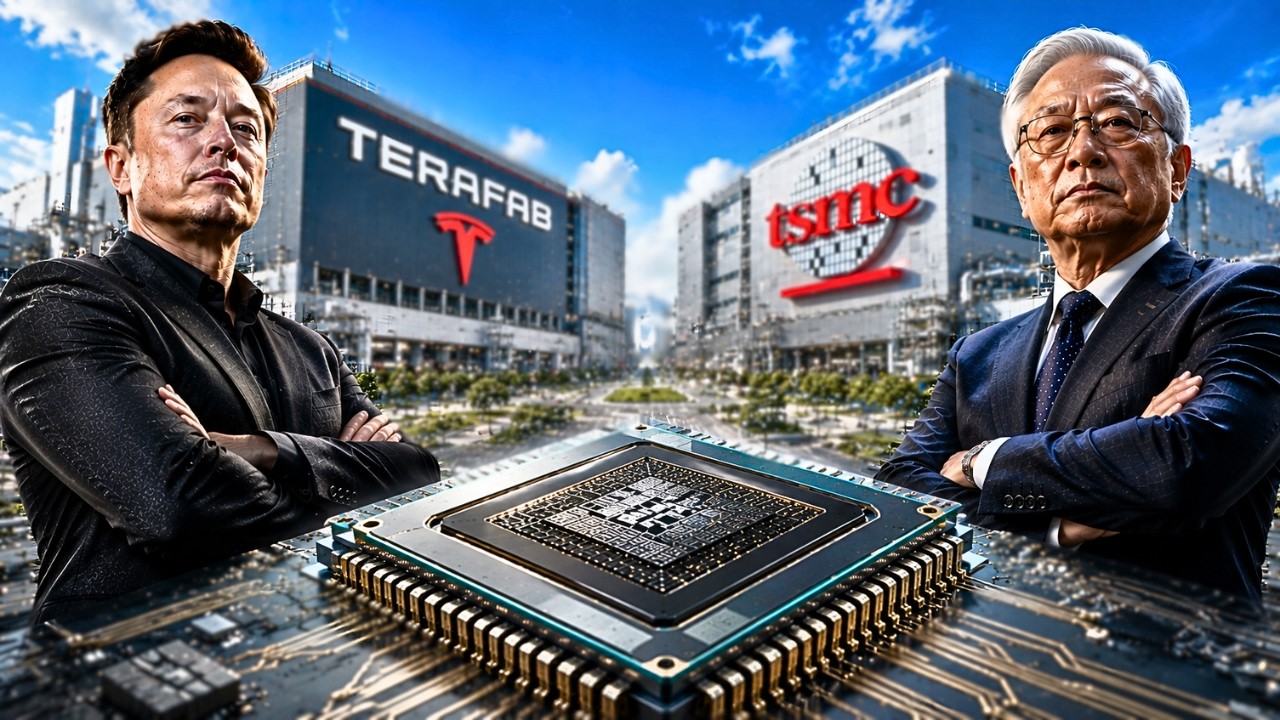

Space Solar Power & Orbital AI
3 clipsOrbital AI satellites use 5x Earth solar flux, vacuum cooling for terawatt compute impossible on-grid. Sun-synchronous orbits enable 24/7 power; Starship launches enable scale.
Space Solar Power & Orbital Data Centers
2 clips5x solar irradiance in orbit, vacuum radiative cooling, 24/7 sunlight enabling cheaper AI than terrestrial grids.

Space Solar Power & Orbital Economics
2 clipsSun-synchronous orbit provides 5x solar irradiance and free radiative cooling; Starship economics make orbital AI cheaper than terrestrial within 2-3 years.

Space Solar Power & Orbital Infrastructure
2 clipsOrbital AI data centers leverage 5x solar irradiance and vacuum cooling, with satellites in sun-synchronous orbits providing 24/7 power without atmospheric losses.
Space vs Terrestrial AI Deployment
2 clips80% of Terafab output heads to orbital AI satellites; 20% stays on Earth. Orbital solar is 5× stronger, vacuum cooling is free, and Starship enables 10 M tons/year payload.
Space vs Terrestrial Deployment
2 clips80% of Terafab output is planned for orbital AI satellites; only 20% stays on Earth. Space offers 5× solar irradiance and free radiative cooling.
SpaceX-Tesla Strategic Synergies
1 clipsSpaceX provides multiple value streams to Tesla including mega pack purchases, Cybertruck fleets, Starlink connectivity for robo taxis, and AI compute infrastructure that accelerates FSD and Optimus development.

Specific Chips (AI5, D3, etc.)
4 clipsAI5 (40-50x AI4 perf, edge inference vehicles/Optimus); D3 rad-hard space chips. AI6 training/data centers. Videos detail specs, timelines (AI5 2026/27).
Starship & 10M Tons to Orbit
3 clipsStarship V3 enables 100 tons to orbit, V4 will do 200 tons. The goal is 10 million tons to orbit per year at 100 kilowatts per ton to reach terawatt-scale space computing.
Suppliers and Light Speed Urgency
3 clipsMusk demands 'light speed' from suppliers like Applied Materials, Tokyo Electron; premiums for priority. Videos note anonymous sourcing, Samsung counter-offer, Intel win.

Supply Chain Bottlenecks and 2% Problem
2 clipsGlobal chip output meets only 2% of projected demand. Geopolitical risks in Taiwan and capacity constraints at TSMC/Samsung force domestic vertical integration strategy.
Supply Chain Bottlenecks & Partners
3 clipsTSMC/Samsung capacity overload (2% demand met); Intel partnership for 14A/18A. Samsung Taylor delays AI6. Videos debate fab risks.
Supply Chain Bottlenecks & Vertical Integration
2 clipsCurrent global chip production meets only 2-3% of needed supply, with 6-month iteration cycles vs Terafab's 7-9 day recursive improvement loop through vertical integration.
Supply-Chain & Geopolitical Risks
2 clipsCurrent global capacity meets only ~2 % of projected demand; dependence on Taiwan and South Korea creates unacceptable geopolitical and capacity risk.
Supply Chain Independence
2 clipsTerafab addresses 98% chip shortage by bringing production in-house, reducing reliance on TSMC/Samsung and mitigating Taiwan geopolitical risks.
Target Chip Production (AI5, D3)
3 clipsFocus on AI5/AI6 for edge inference in vehicles/Optimus and D3 radiation-hardened chips for space/orbital AI, with 20% terrestrial and 80% space allocation.
Tax Incentives & Local Government Approval
2 clipsThe project requires approval from two small Texas school districts (Anderson-Shiro CISD and Iola ISD) under Texas's JETI program. SpaceX filed eight applications for tax incentives, with the $119B figure revealed as only a good-faith estimate rather than a binding commitment.
Terafab Announcement & Galactic Vision
3 clipsElon Musk unveils Terafab as a joint Tesla-SpaceX-xAI project to produce 1 terawatt of AI compute annually, framed as essential for becoming a galactic civilization harnessing solar power in space. The vision ties chip production to multi-planetary expansion, Kardashev scale advancement, and abundance through AI and robotics. Multiple videos replay the keynote emphasizing science fiction becoming fact.

Terafab Announcement Overview
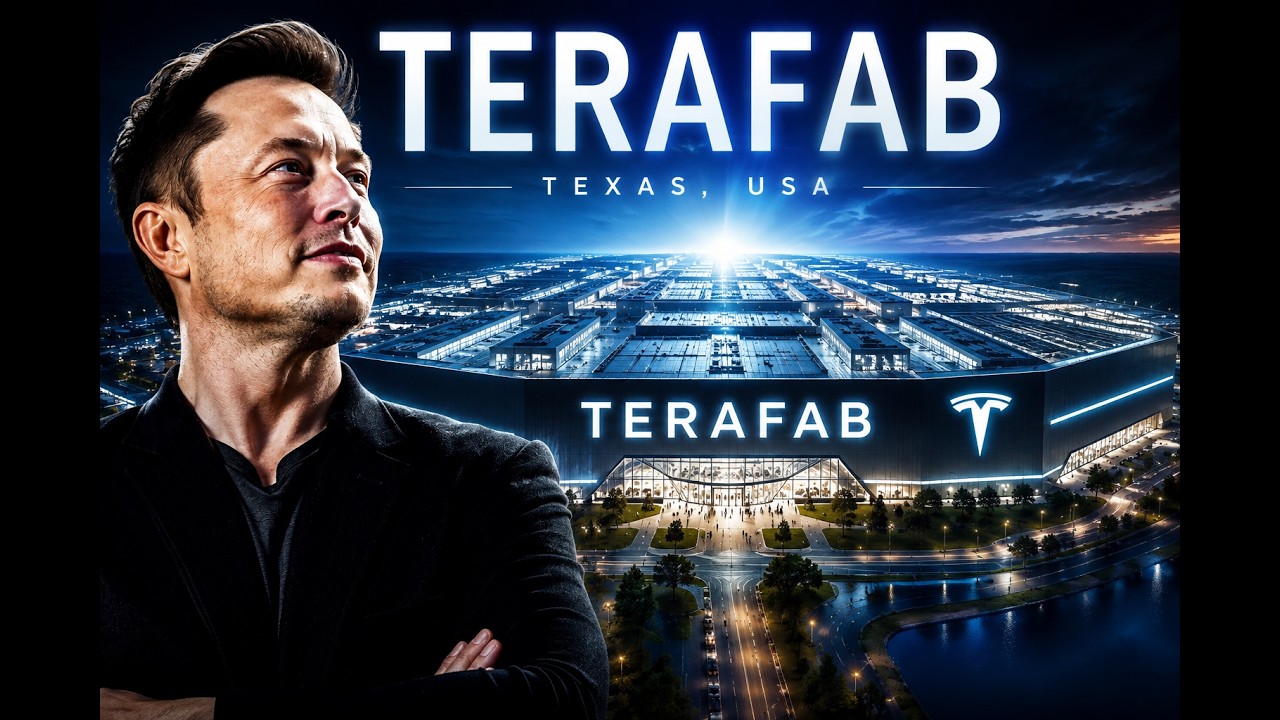
3 clipsElon Musk announced Terafab as a joint Tesla-SpaceX-xAI project to build the largest chip factory ever, targeting 1 terawatt of AI compute annually. The facility consolidates design, fabrication, memory, and packaging under one roof for unprecedented scale. It addresses chip shortages for FSD, Optimus, and space AI.
Terafab Location and Site Selection
3 clipsVideos discuss potential sites for Terafab, primarily near Giga Texas north campus in Austin or Grimes County near College Station, citing proximity to power, water, and talent from Texas A&M. Emphasis on infrastructure challenges in rural areas and Texas incentives.
Terafab Manufacturing Scale
2 clipsTarget output is 1 terawatt of AI compute per year—roughly 50× current global production. The facility aims for 1 million wafer starts per month at full capacity.

Terafab Massive Scale
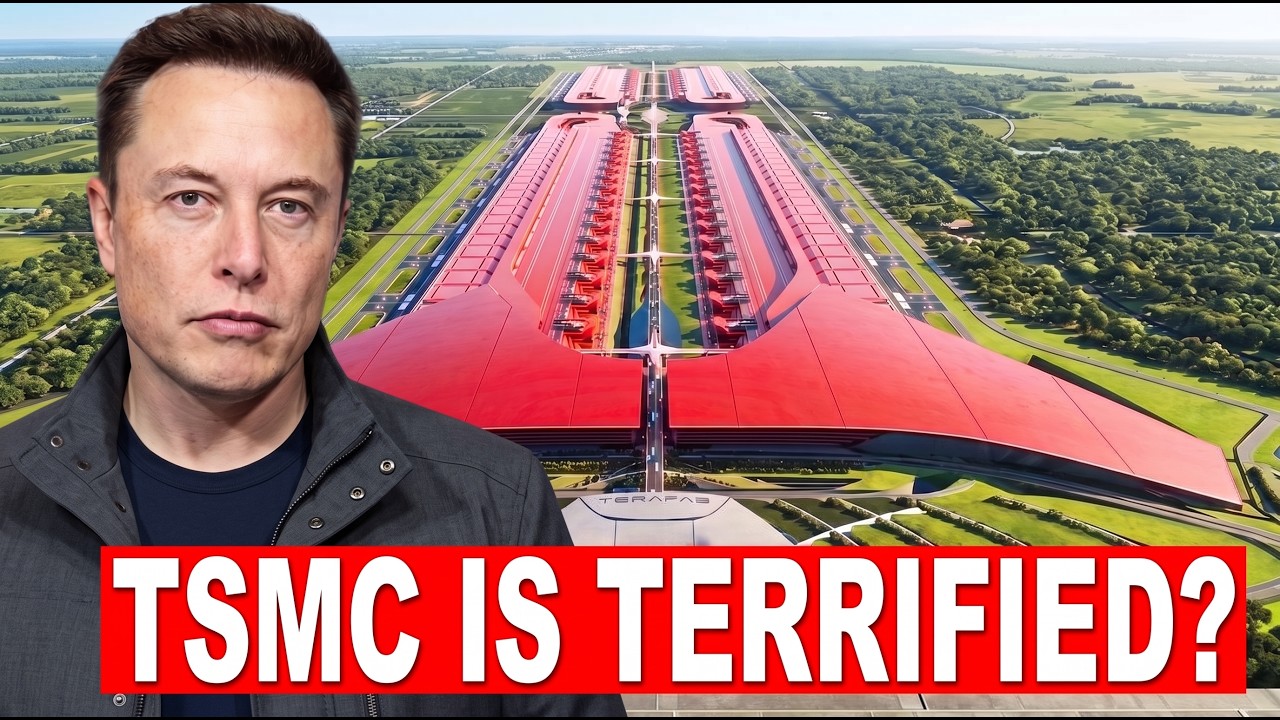
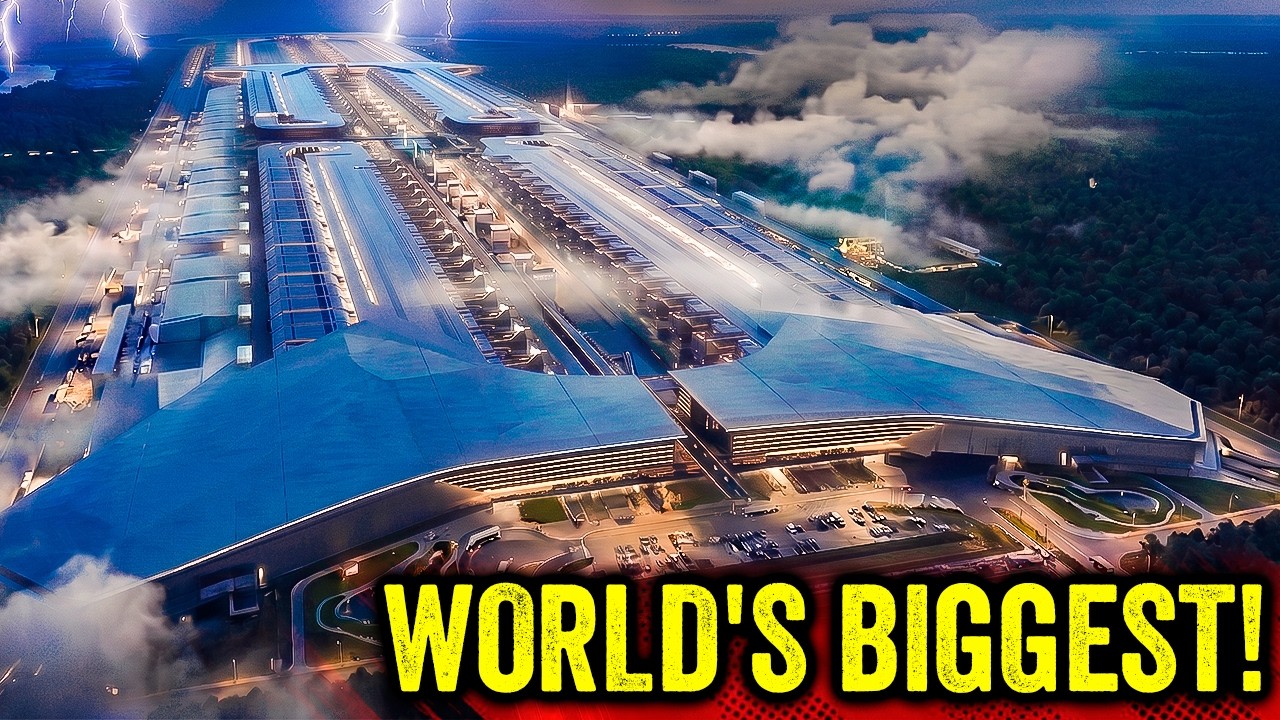
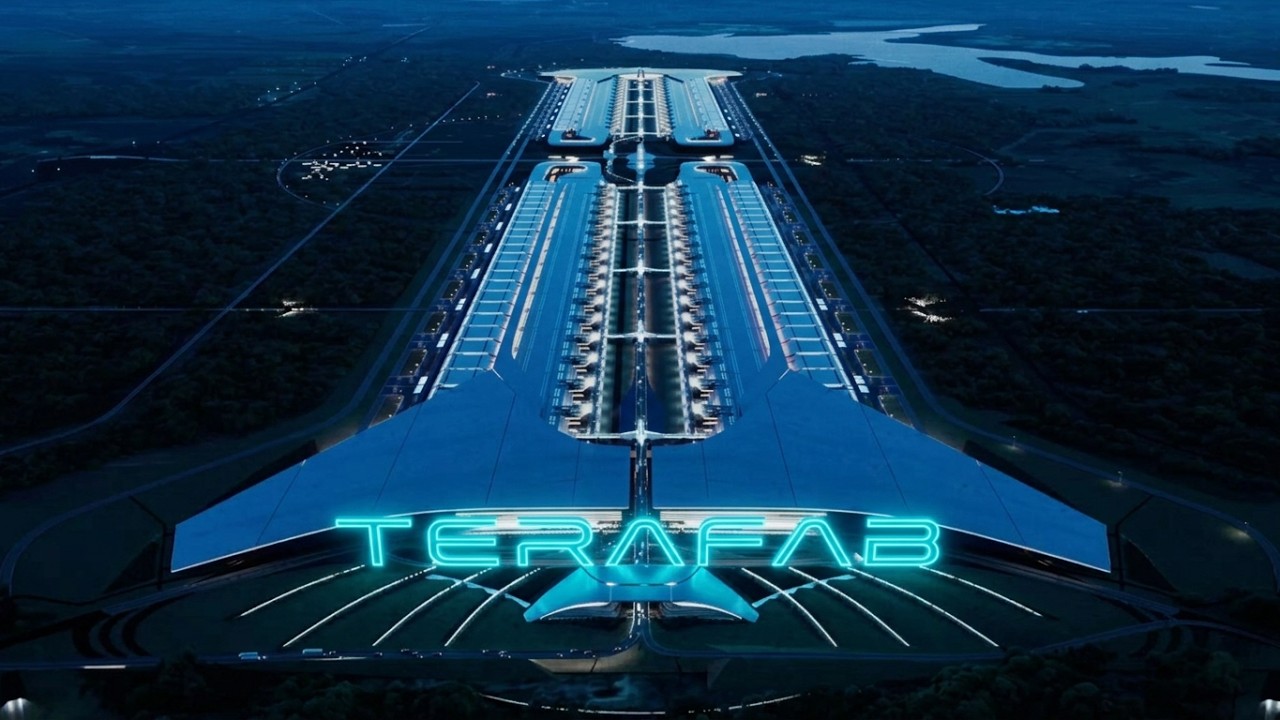
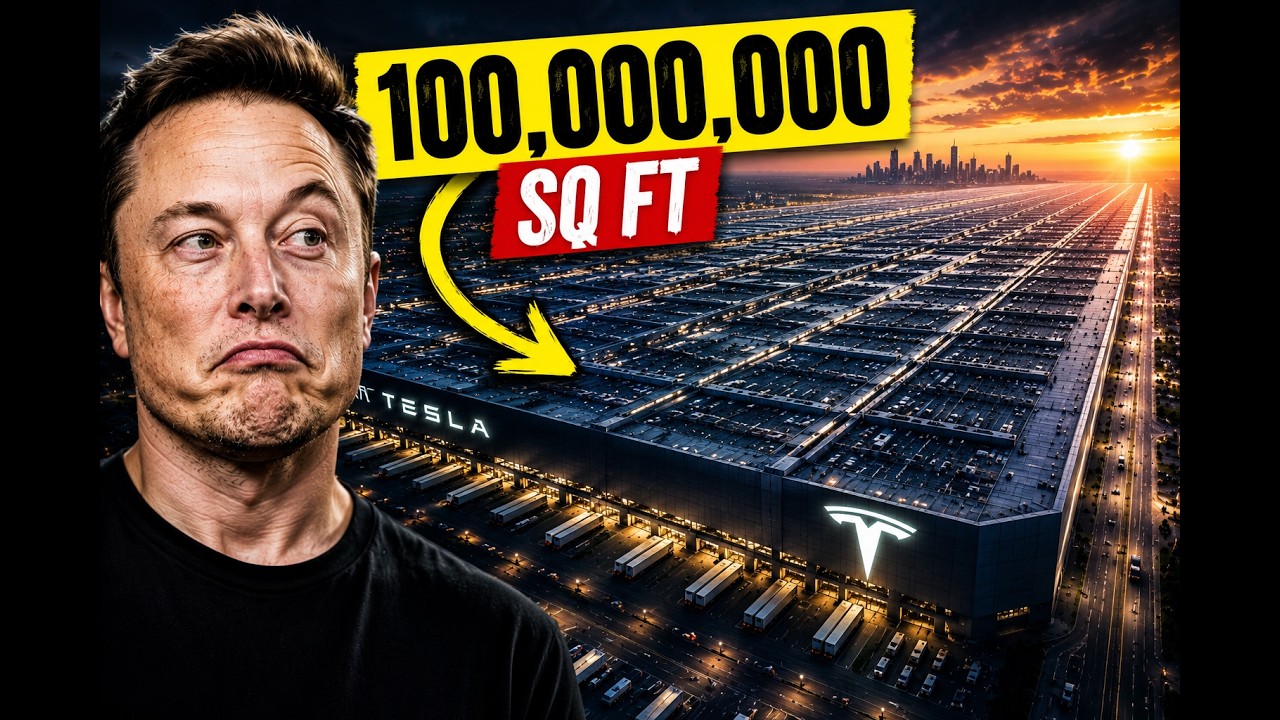
2 clipsThe facility targets 100 million square feet (10x Giga Texas), 1 terowatt of annual AI compute, and 1 million wafer starts per month at full capacity.
Terafab Overall Scale & Ambition
2 clipsA single 100-million-square-foot facility targeting 1 terawatt of annual AI compute—50x current global output—with 1 million wafer starts per month at full capacity.
Terafab Physical Scale and Footprint
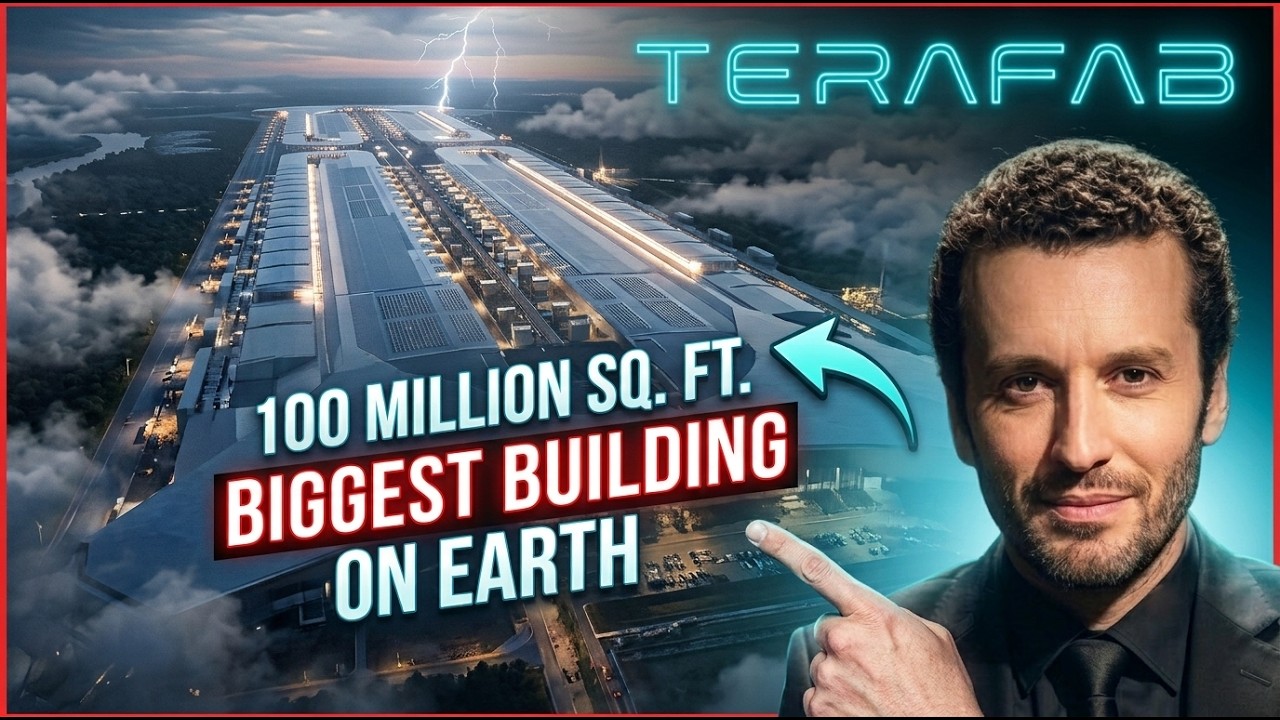
2 clipsThe facility is described as 100 million square feet, roughly 10 times larger than Giga Texas and comparable to multiple iconic landmarks combined.
Terafab Production Scale and Targets
2 clipsThe facility targets 1 terawatt of annual AI compute, roughly 50 times current global output. Initial capacity is 100,000 wafer starts per month scaling to 1 million, producing 100-200 billion chips yearly.
Terafab Production Scale and Targets
2 clipsThe facility targets 1 terawatt of annual AI compute, 100,000-1 million wafer starts per month, and 100-200 billion chips yearly—roughly 50-70x current global output from a single site.
Terafab Scale & 1 TW Target
2 clipsSingle facility targeting 1 terawatt of annual AI compute—50× current global output—with 100k–1M wafer starts per month and 100–200 billion chips/year.
Terafab Scale & 1 TW Target
2 clipsThe facility targets 1 terawatt of annual AI compute—roughly 50× current global output—via 100k–1M wafer starts per month and 100–200 billion chips per year.

Terafab Scale & Ambition
2 clipsThe facility targets 100 million square feet, 1 terawatt of annual AI compute, and 1 million wafer starts per month—roughly 70% of TSMC's global output from a single site.
Terafab Scale and Cost
4 clipsTerafab targets 100K-1M wafers/month (70% TSMC output), 100-200B chips/year, $20-25B initial cost (potentially $300B+ full), 100M sq ft (10x Giga Texas). Videos detail Austin prototype, full fab needing thousands of acres/10GW power, unprecedented ambition.
Terafab Scale and Facility Comparisons
3 clipsThe facility targets 100 million square feet, roughly 10 times Giga Texas and larger than Wolfsburg or Ulsan complexes. Initial output of 100,000 wafers per month scales to 1 million, equating to 70% of TSMC's global capacity from one site.
Terafab Scale and Footprint
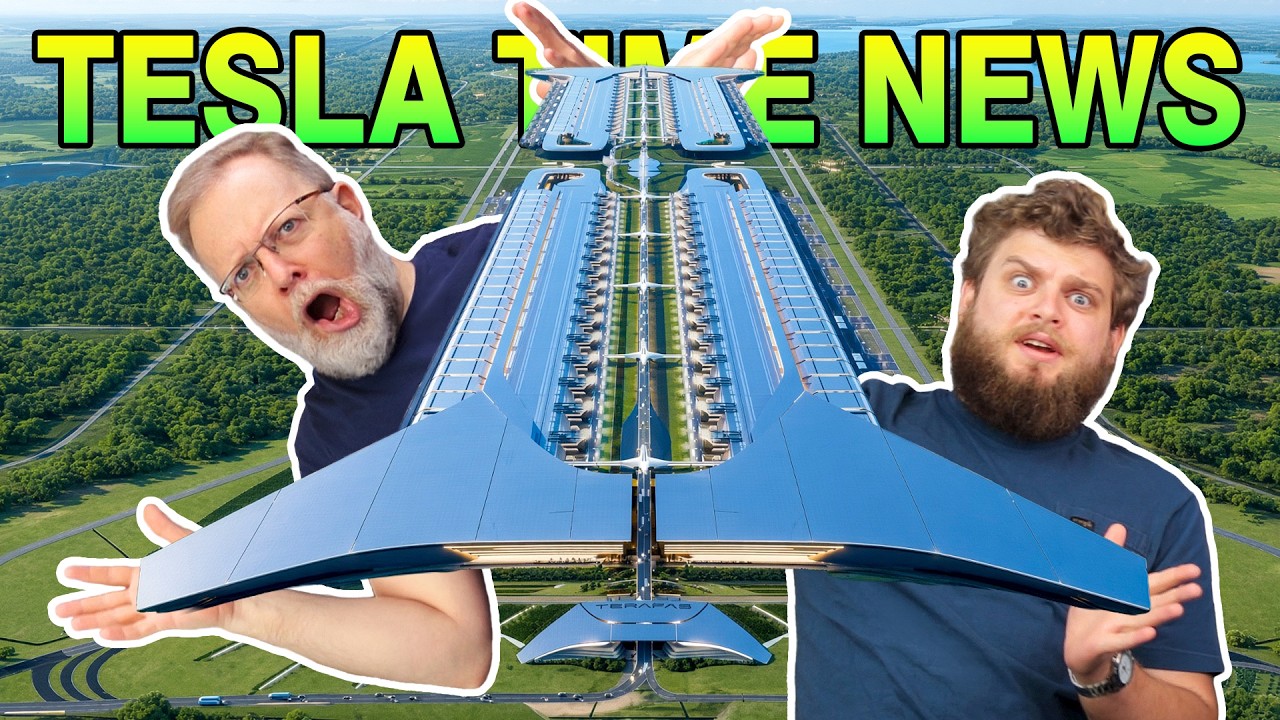
2 clipsThe facility targets 100 million square feet, roughly 10 times Giga Texas and larger than the Pentagon, Apple Park, and Mall of America combined, making it one of the largest buildings ever planned.
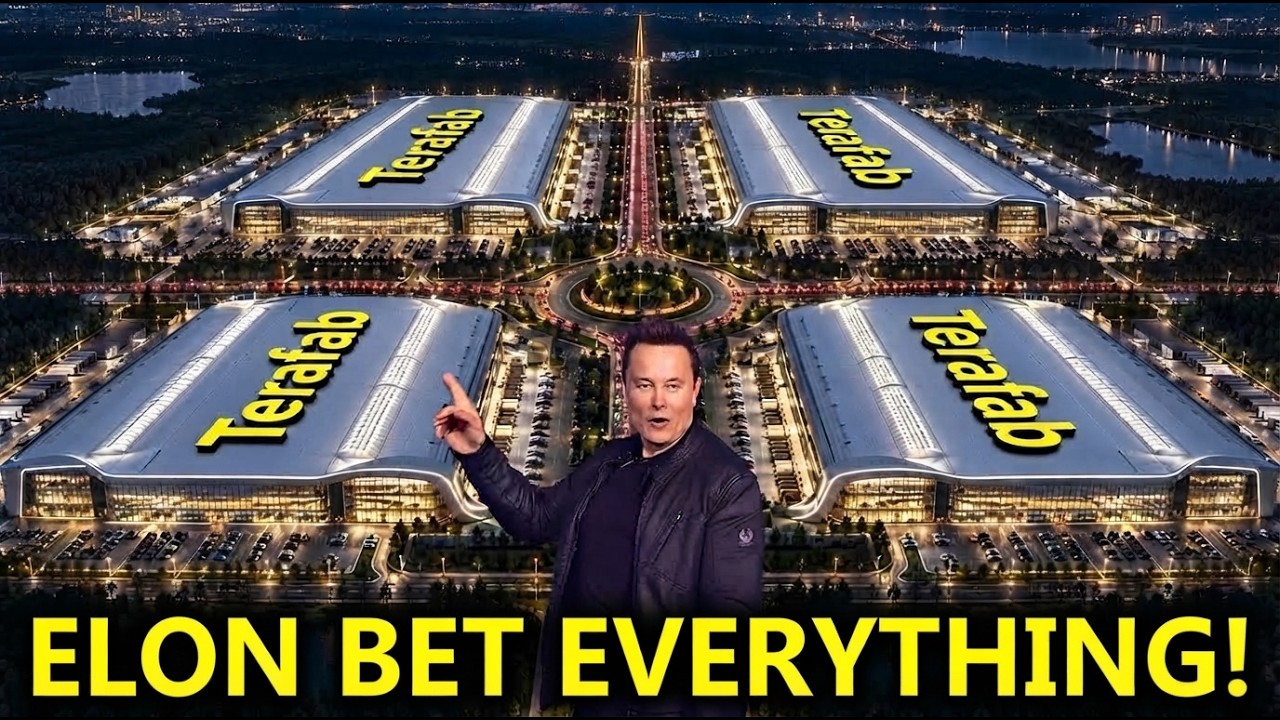
Terafab Scale & Austin Construction
2 clipsThe facility targets 100 million square feet, 10x larger than Giga Texas, with initial 100k wafer starts per month scaling to 1 million. Construction is already visible on the north campus of Giga Texas.
Terafab Scale & Investment
2 clipsThe project has ballooned from $25B to $119B across 22,000 acres, representing 10x the footprint of Giga Texas and requiring 10 gigawatts of power at full scale.
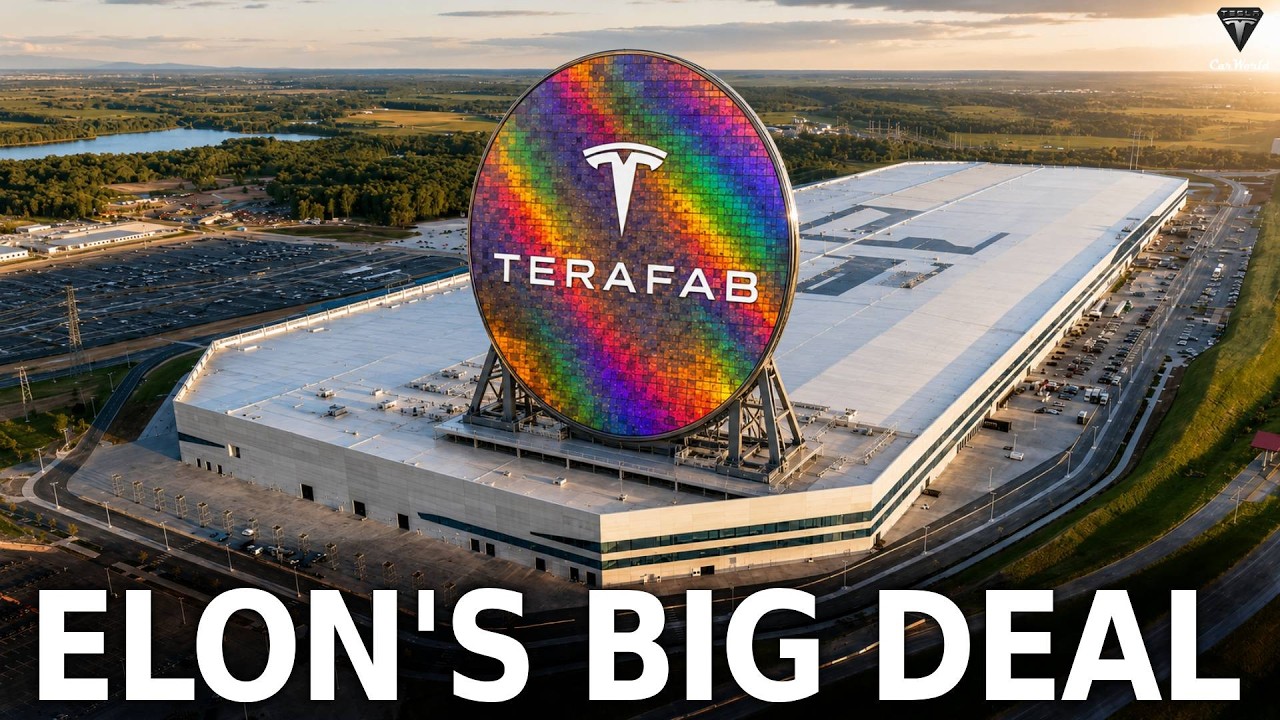
Terafab Scale & Physical Footprint
2 clipsThe facility is planned at 100 million square feet, approximately 10 times larger than Gigafactory Texas and 50 times the Pentagon. This makes it one of the largest buildings ever conceived, requiring thousands of acres and over 10 gigawatts of power at full scale.
Terafab Scale & Production Goals
2 clipsThe facility targets 1 terawatt of annual AI compute, 100 million square feet, and 1 million wafer starts per month—roughly 70% of TSMC's global output from a single site.
Terafab Scale & Production Targets
5 clipsTerafab aims for 1 million wafer starts/month, producing 100-200B chips/year at 2nm, rivaling 70% of TSMC's global output. Initial phase: 100K wafers/month scaling massively. Videos highlight unprecedented volume for AI/robots/space.
Terafab Scale & Production Targets
4 clipsTerafab aims for 100K-1M wafer starts/month, 100-200B chips/year, 1TW compute annually, dwarfing global output. Initial $20-25B investment, full buildout $5-13T. Videos detail 70% of TSMC's output from one site.
Terafab Scale & Production Targets
2 clipsThe facility targets 1 terawatt of annual AI compute—50x current global output—via 1 million wafer starts per month, producing 100-200 billion chips yearly.
Terafab Scale & Specifications
2 clipsThe facility targets 100 million square feet (10x Giga Texas), 1 terowatt annual compute output, and 1 million wafer starts per month—roughly 70% of TSMC's global capacity from a single site.

Terafab Scale & Texas Location
2 clipsTerafab targets 100 million square feet, 10x Giga Texas, sited in Grimes County near Gibbons Creek Reservoir with 10+ GW power needs; initial Austin R&D fab is only the prototype.
Terafab Vertical Integration
4 clipsTerafab consolidates design, lithography, fabrication, memory, packaging, and testing in one facility for rapid iteration (days vs months). Unprecedented scale: 100M sq ft, 1M wafer starts/month (70% TSMC global output). Cost $20-25B initial.
Terawatt Scale Manufacturing
4 clipsCurrent global AI chip production is ~20 gigawatts/year. Terafab targets 1 terawatt/year - 50x current global output. All existing fabs combined provide only 2% of what's needed.
Terawatt-Scale Production Ambition
5 clipsTarget 1 TW AI compute/year (50x global output); 100M sq ft, 1M wafers/month (70% TSMC global). Initial 100K wafers/month scaling up. Videos detail $20-25B cost, power needs (10GW+).
Terrestrial AI Chips for Vehicles and Robots
3 clipsAI5 and AI6 chips target edge inference for FSD, Cybercab, and Optimus robots, delivering 40-50x compute and 9x memory over AI4 at 250W. Production begins with Samsung and TSMC before shifting to in-house manufacturing.
Terrestrial Applications: Optimus & Cybercab
2 clips20% of Terafab output serves Earth-based applications including AI5/AI6 chips for Optimus humanoid robots, Cybercab robo-taxis, and full self-driving systems. Musk projects Optimus production at 1-10 billion units annually, requiring 10-100x the chip volume of Tesla's automotive business.
Terrestrial Chips for Optimus & FSD
2 clipsAI5/AI6 inference chips power Cybercab, Optimus robots and FSD; 20 % of output stays on Earth.
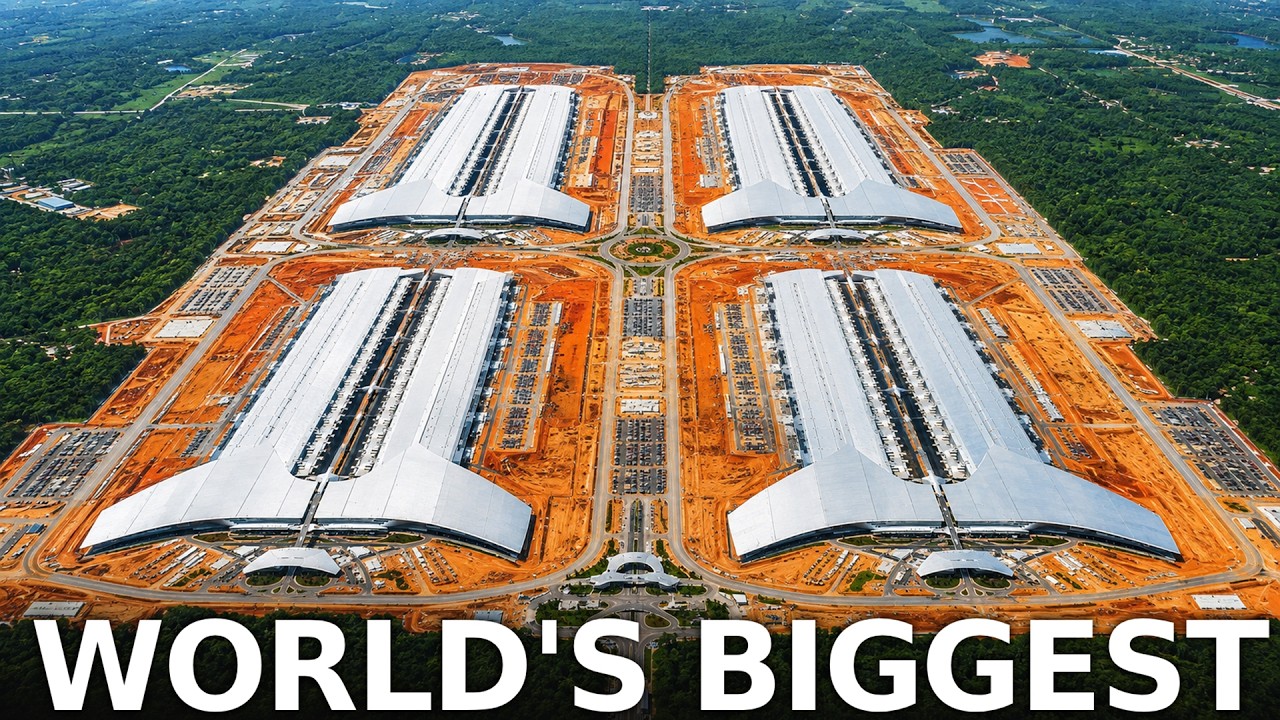
Terrestrial Chips for Optimus/FSD
3 clipsAI5/AI6 chips target edge inference for FSD, Cybercab, and Optimus robots, with 40-50x performance over AI4. Optimus production could reach 1-10B units/year, driving massive demand. Chips optimized for low power, high efficiency in vehicles/robots.
Terrestrial vs Space-Grade Chips
2 clipsAI5/AI6 inference chips power Earth-based vehicles and Optimus robots; D3 radiation-hardened chips are optimized for orbital AI satellites that run hotter and require less cooling mass.
Tesla-SpaceX Merger Speculation
2 clipsJoint Terafab fuels merger talk post-XAI/SpaceX. Shared chips/power for space AI. $1.25-2T SpaceX IPO funds.

Tesla, SpaceX & xAI Integration
3 clipsTerafab represents unprecedented integration between Tesla (robots, solar, vehicles), SpaceX (launch capability), and xAI (AI development). Each company contributes essential capabilities.
Tesla/SpaceX/XAI Merger Implications
3 clipsJoint venture signals convergence; SpaceX owns XAI. Terafab shared across companies; SpaceX IPO funds. Inevitable full merger speculation.

Texas Ecosystem Integration
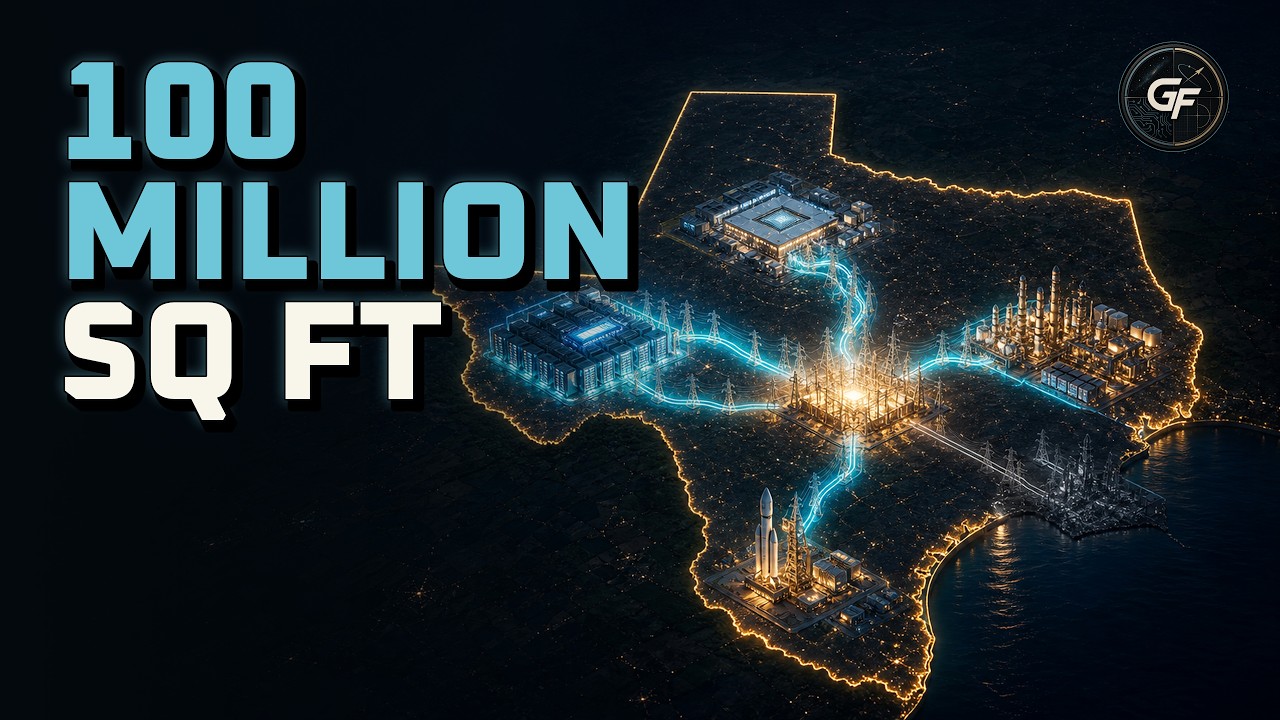
2 clipsTerafab is positioned as the missing semiconductor piece in Musk's Texas-based technology ecosystem, connecting Gigafactory Texas (vehicles/AI), lithium refinery (Corpus Christi), energy/solar manufacturing (Houston), and Starlink production (Bastrop). The project creates a vertically integrated supply chain spanning vehicles, batteries, energy, semiconductors, and space technology—all within Texas.
Texas Water & Environmental Impact
1 clipsTerafab requires billions of gallons of ultra-pure water annually in a region experiencing extreme drought; 66% of Travis County already under extreme drought conditions.
The 2% Chip Supply Crisis
4 clipsGlobal fabs produce only 2% of Musk's companies' future AI chip needs for Tesla FSD, Optimus, XAI clusters, and SpaceX satellites. Videos highlight exponential demand outpacing TSMC/Samsung expansion, forcing Terafab for sovereignty. Crisis stems from AI/robotics scale beyond smartphone/laptop fabs.
Threat to Nvidia & Competitors
2 clipsAI5 matches H100/Blackwell at 1/10 cost/power. Videos see Nvidia stock dip, fabless vulnerability. Terafab ends reliance on external GPUs.
Timelines, Challenges & Risks
3 clipsPilot 2026 AI5 small-batch, volume 2027; full Terafab 2028-29. No fab experience; $5-13T full scale; ASML bottlenecks. Skeptics cite 4680 delays.
TSMC Comparison Capacity
2 clipsTerafab at full scale would equal 70% of TSMC's global output from one Texas site, targeting 1M wafers/month vs TSMC's 150K.

Two-Facility Structure at Giga Texas
2 clipsTerafab comprises two separate construction projects: one for advanced chip fabrication and another for Optimus robot production. Drone footage confirmed distinct sites with independent designations.
Unprecedented Factory Scale
5 clipsTerafab targets 100M sq ft (10x Giga Texas), 1M wafer starts/month (70% TSMC global output), $20-25B initial cost. Full 1TW compute requires $5-13T total. Austin prototype starts small, scales massively.
Vertical Integration: All Under One Roof
3 clipsTerafab consolidates design, lithography, fabrication, memory, packaging, testing in single facility. Enables days-long iteration vs months. No precedent exists for this full-stack integration.
Vertical Integration and Recursive Loop
3 clipsTerafab collapses design, mask making, fabrication, packaging, and testing into one building, enabling 7-9 day iteration cycles versus 6-9 months in traditional supply chains. This closed-loop system allows rapid design-test-revise cycles without intercontinental shipping.
Vertical Integration & Fast Iteration
3 clipsTerafab's key innovation is full vertical integration: design, masks, fab, packaging, testing in one building for days-long iteration loops vs months. This recursive improvement enables rapid chip evolution unmatched globally.
Vertical Integration in Chip Fab
4 clipsTerafab uniquely integrates chip design, lithography, fabrication, memory production, packaging, and testing in one facility for rapid iteration. This eliminates global supply chain delays, enabling weeks-long cycles instead of months. No other fab operates this way at scale.

Vertical Integration in Chip Manufacturing
4 clipsTerafab consolidates design, lithography, fabrication, memory, packaging, and testing under one roof for rapid iteration, eliminating global supply chain delays. This recursive loop allows chip redesign and testing in days, not months, unprecedented in the industry.
Vertical Integration in Chip Production
4 clipsTerafab consolidates design, lithography, fabrication, memory, packaging, and testing under one roof for rapid iteration. Musk claims no such facility exists globally, enabling 9-month chip cycles vs. industry 12-18 months. This recursive loop accelerates improvement by orders of magnitude.
Vertical Integration in One Facility
4 clipsTerafab consolidates design, lithography, fabrication, memory, packaging, and testing under one roof for rapid iteration. No other fab does this globally. Enables 9-month chip cycles vs. industry 12-18 months.
Vertical Integration & Recursive Loop
1 clipsDesign, mask-making, fabrication, packaging and testing all under one roof enables 7–9 day iteration cycles instead of 6–9 month global supply-chain loops.
Vertical Integration & Recursive Loop
2 clipsAll stages—design, mask making, fabrication, packaging, testing—under one roof enables 7-9 day iteration cycles versus 6-9 months in traditional global supply chains.
Vertical Integration & Recursive Loop
2 clipsAll stages—design, lithography, fabrication, memory, packaging, testing, mask making—happen in one building, enabling 7–9 day chip iteration cycles instead of 6–9 months.
Vision for Galactic Civilization / Kardashev Scale
3 clipsTerafab first step to Type 2 civilization harnessing sun's energy via space AI/solar; mass driver on moon for pedawatt compute.
Water & Energy Crisis Solutions
2 clipsFabs need 10M gallons/day UPW; Texas drought risks shutdown. TSMC/Intel recycling models; Terafab copies for 90% reuse. 10GW power via solar.
Water Supply & Recycling Challenges
1 clipsVideo 5 warns Terafab's 10M gal/day ultra-pure water in drought-prone Austin risks shutdown. TSMC/Intel models recycle 85-90%; Musk must exceed for 2027 production.
Yield, EUV & Talent Challenges
2 clips2nm yields start at 20-40% for new entrants; ASML EUV machines have 18-24 month lead times; global shortage of process engineers; clean-room vibration control critical next to stamping lines.

















Last updated: September 24, 2026 • 100 videos • 333 topics